
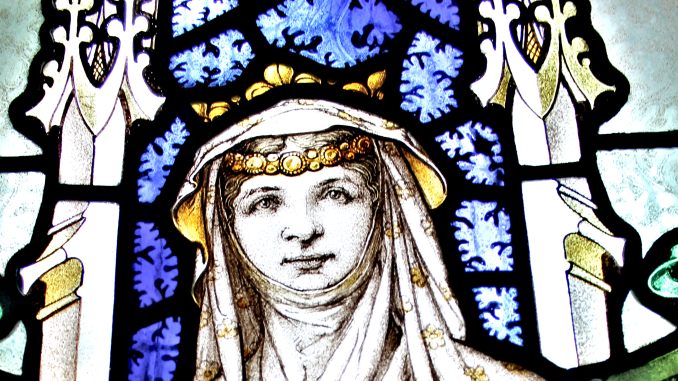
Twenty-fifth great grandmother Joan Plantagenet was the illegitimate daughter of England’s King John – but she married Prince Llewellyn the ruler of Wales, and mediated her husband’s stormy relationship with her father and the English. We can trace an unbroken line back to her through the Trathen/Irwin/Wemyss branch of our ancestors.
Joan was born in 1191, probably in Normandy, the result of an affair King John of England had with a woman called Clemence. John was married at the time to Isabella, Countess of Gloucester (let’s face it, John’s reputation has not been exactly stellar down the centuries) though that marriage was annulled in 1199.
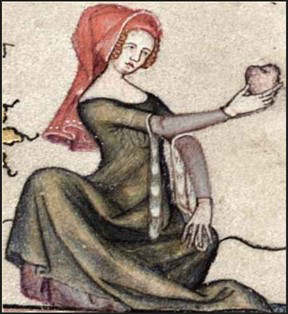
So although illegitimate, she was a Plantagenet, with royal blood, and so John brought her to England in December 1203 to be married to Prince Llywelyn ab Iorwerth of Wales. In the summer of 1204, Llywelyn had paid homage to King John for his Welsh lands, having recognised the English king as overlord by treaty in July 1201; so by allowing him to marry Joan, John was showing the Welsh leader was in his favour. By the time of his marriage, Llywelyn was already an accomplished warrior and experienced statesman. They were married at St. Werburgh’s Abbey in Chester (now Chester Cathedral). Joan was fourteen or fifteen at the time; at thirty-two, Llywelyn was about eighteen years her senior. For such a young girl – who had probaby had a year-long crash course learning the ways of the Welsh court, it must have been a steep learning curve. The language and traditions of her new homeland would have been completely alien to the young woman. Even her name was not the same; in Welsh, she was known as Siwan.
Joan often mediated between her husband and her father, King John. According to Brut y Tywysogion (The chronicle of the princes), when John was successfully campaigning in North Wales, “Llywelyn, being unable to suffer the king’s rage, sent his wife, the king’s daughter, to him, by the counsel of his leading men, to seek to make peace with the king on whatever terms he could.”
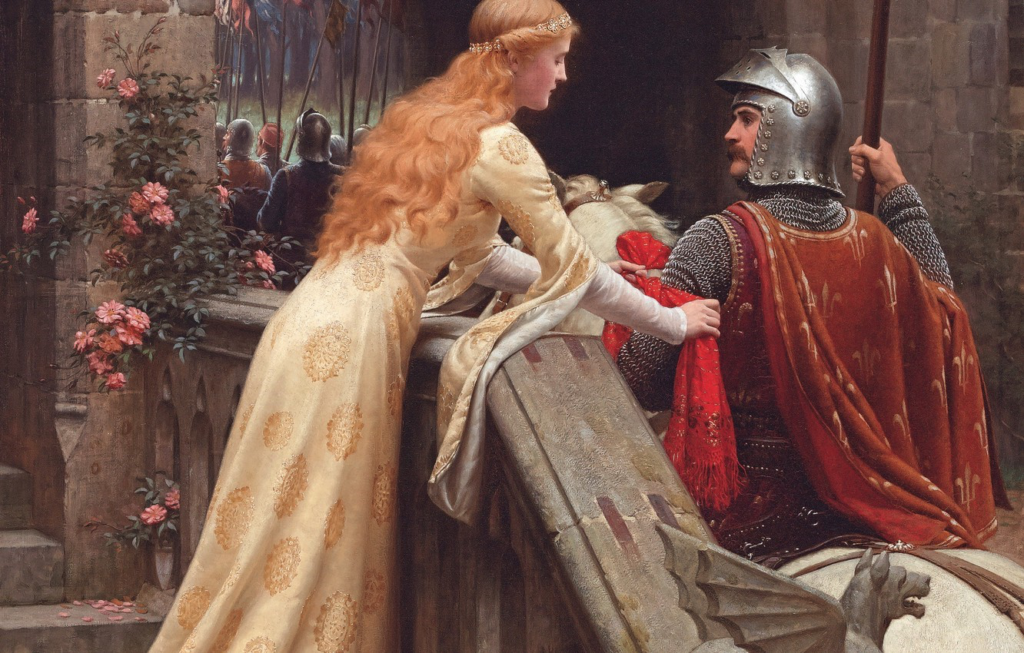
In the Middle Ages it wasn’t common for women to be involved with politics unless they happened to be from a noble family, in which case their marriages, by their very nature, were political. Such women possessed greater freedom of action than many of their contemporaries, and indeed Joan proved her worth as a diplomat
She was an important diplomatic tool for her father and, later, her half-brother who succeeded to John’s throne, Henry III; acting as negotiator and peacemaker between the English crown and her husband, almost from the first day of her marriage. Despite that marriage, relations between Wales and England were stormy, and in 1211, the English army had swept into Gwynedd, capturing the Bishop of Bangor in his own cathedral. Joan managed to negotiate peace, but at a high price, including the loss of the land between the Conwy and the Dee rivers, a heavy tribute of cattle and horses and the surrender of hostages, including Llywelyn’s son, Gruffudd.
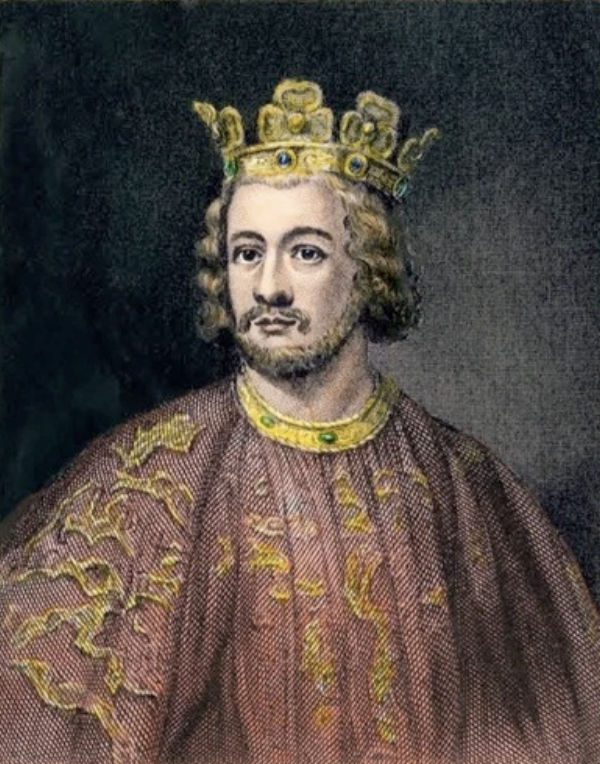
The last years of John’s reign were taken up with conflict with his barons, leading to the issuing of Magna Carta in 1215 and a French invasion by Louis, eldest son of Philip II Augustus. The last thing John needed, if he was to save his kingdom, was to be distracted by discontent in Wales. In 1214 Joan successfully negotiated with her father for the release of the Welsh hostages still in English hands, including Llywelyn’s son, Gruffudd; they were freed the following year.
After Henry III took the throne following the death of John (from dysentery) in October 1216, Joan continued to work towards peace between Wales and England. She visited Henry in person in September 1224, meeting him in Worcester; Joan seems to have had a good relationship with her half-brother. A letter to Henry III, addressed to her ‘most excellent lord and dearest brother’ is a plea for him to come to an understanding with Prince Llywelyn. In the mid-1220s, Henry also acted as a sponsor, with Llywelyn, in Joan’s appeal to Pope Honorius III to be declared legitimate; in 1226 her appeal was allowed on the grounds that neither of Joan’s parents had been married to others when she was born.
But not everything in Llywelyn’s garden was lovely. In 1230 Joan was caught up in an affair. During Easter William de Braose, who was at the time her husband’s prisoner, was discovered with her in her husband’s bed-chamber. William was a wealthy Norman baron, and hated by the Welsh, who had given him the nickname Gwilym Ddu, or Black William. The exact details of the relationship between Joan and William are unknown; neither can we say whether Joan was with William de Braose by choice or force. At the time, however, the blame was laid at Joan’s door. Contemporaries were deeply shocked at Joan’s betrayal of her husband; indeed, following this scandal, Welsh law identified the sexual misconduct of the wife of a ruler as ‘the greatest disgrace’. For this, William was hanged on 2 May 1230. Joan was placed under house arrest. Maybe it was due to the strength of the previous relationship between Llywelyn and Joan, or maybe it was the high value placed on Joan’s diplomatic skills and her links with the English court; she was forgiven just 12 months later.
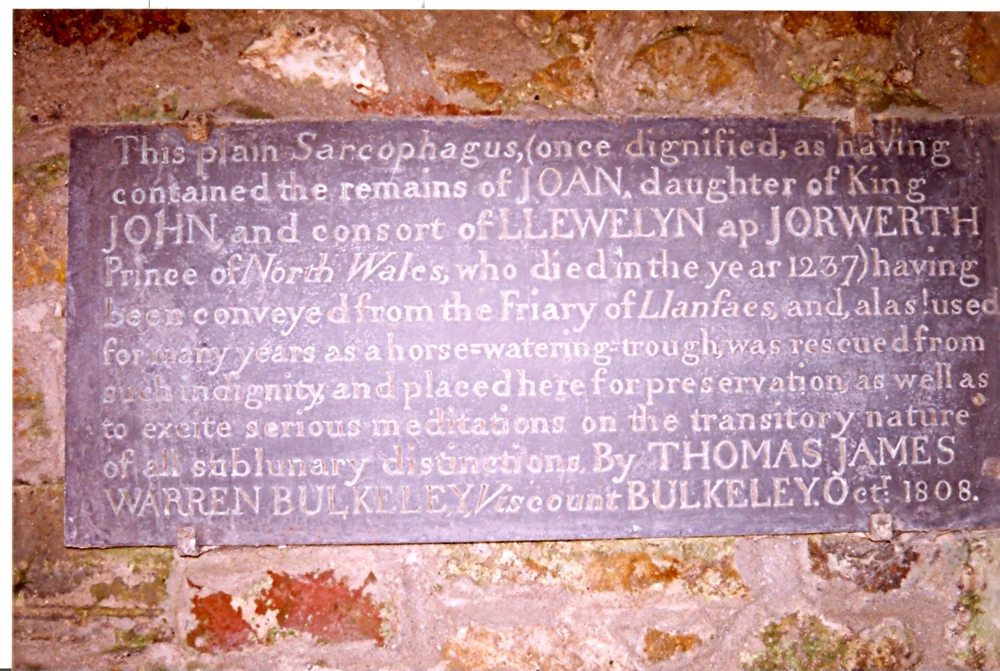
Joan died at Garth Celyn, Abergwyngregyn, on the north coast of Gwynedd, on 2 February 1237. The Welsh prince was deeply affected by grief. She was buried close to the shore of Llanfaes, in the Franciscan friary that Llywelyn founded in her memory – a testament to his love for her.
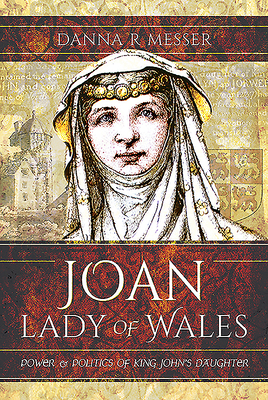
Joan is the subject of a couple of books – the first, Joan, Lady of Wales, written (left) by Danna Messer, interweaves the details of her life and relationships with a gendered re-assessment of Anglo-Welsh politics by highlighting her involvement in affairs, discussing events in which she may well have been involved but have gone unrecorded and her overall deployment of royal female agency. The fact that much of her life went unrecorded has left plenty of room for historical fiction writers, such as Here Be Dragons, a novel written by Sharon Kay Penman and published in 1985. This is the the first of Penman’s trilogy about the medieval princes of Gwynedd and the monarchs of England. Penman juxtaposes the central love story between Joan and Llewelyn the Great against a tapestry of medieval conventions, wars for territory, and the conflict between Llewelyn’s fight to maintain an independent Wales and to appease the English King John. Penman explains: “All we know about Joanna are the bedrock facts about her life. I took those facts and did my best to breathe life into them”