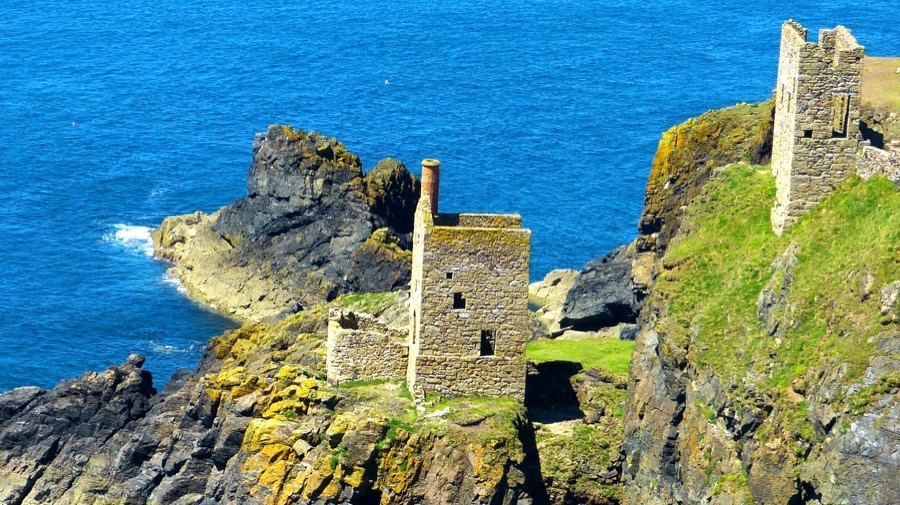

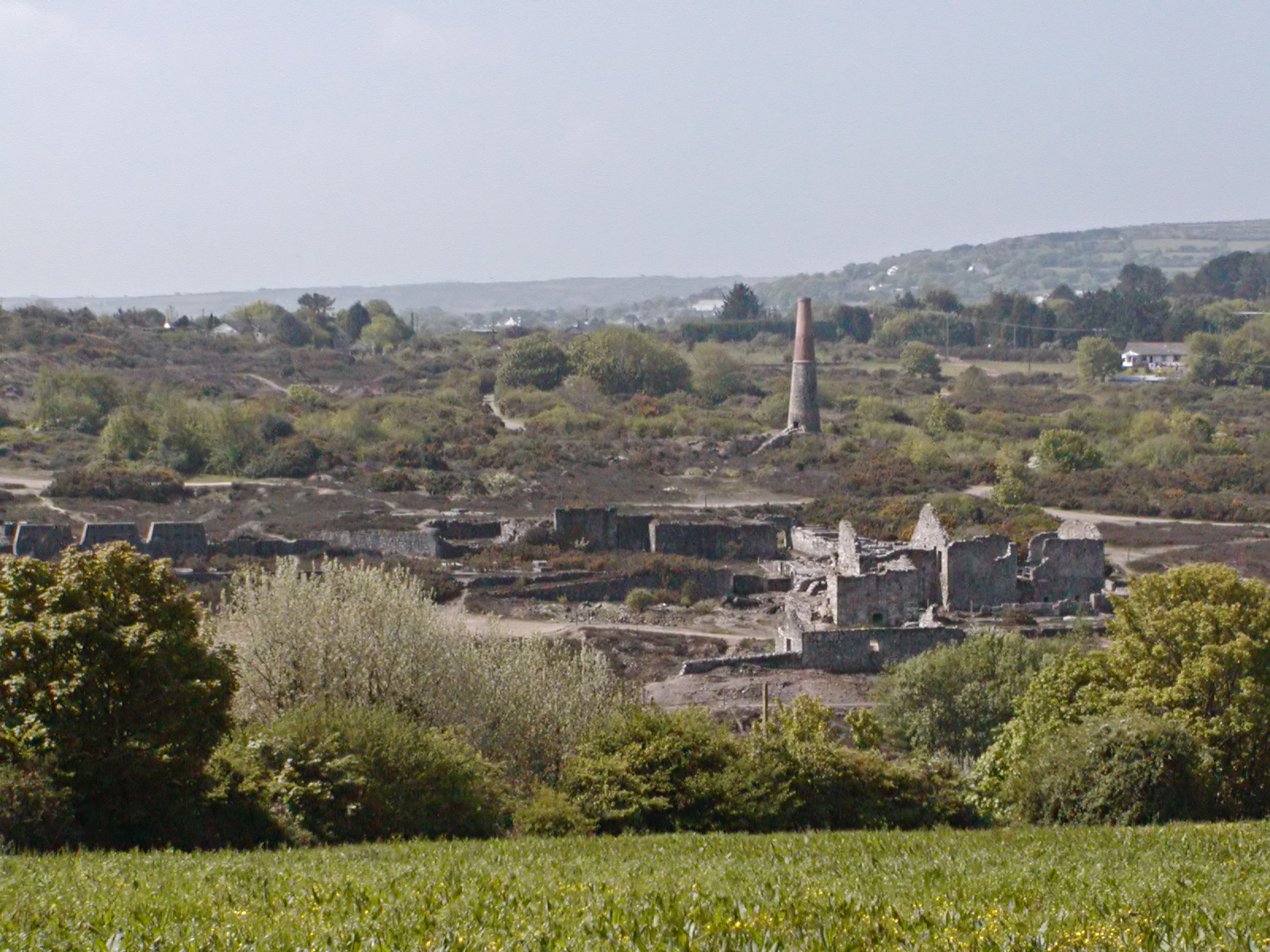
Our Trathen forebears may have ended up in the lead mines of Cumberland but before that, the family had worked in the tin and copper mines of Cornwall.
The parish of Gwennap was the richest copper mining district in Cornwall and was called the “richest square mile in the Old World”. It is about five miles (8 km) southeast of Redruth. Gwennap is near the course of the Great County Adit which was constructed to drain mines in the area including several of the local once-famous mines such as Consolidated Mines, Poldice mine and Wheal Busy. Today it forms part of the Gwennap Mining District of the Cornwall and West Devon Mining Landscape World Heritage Site.
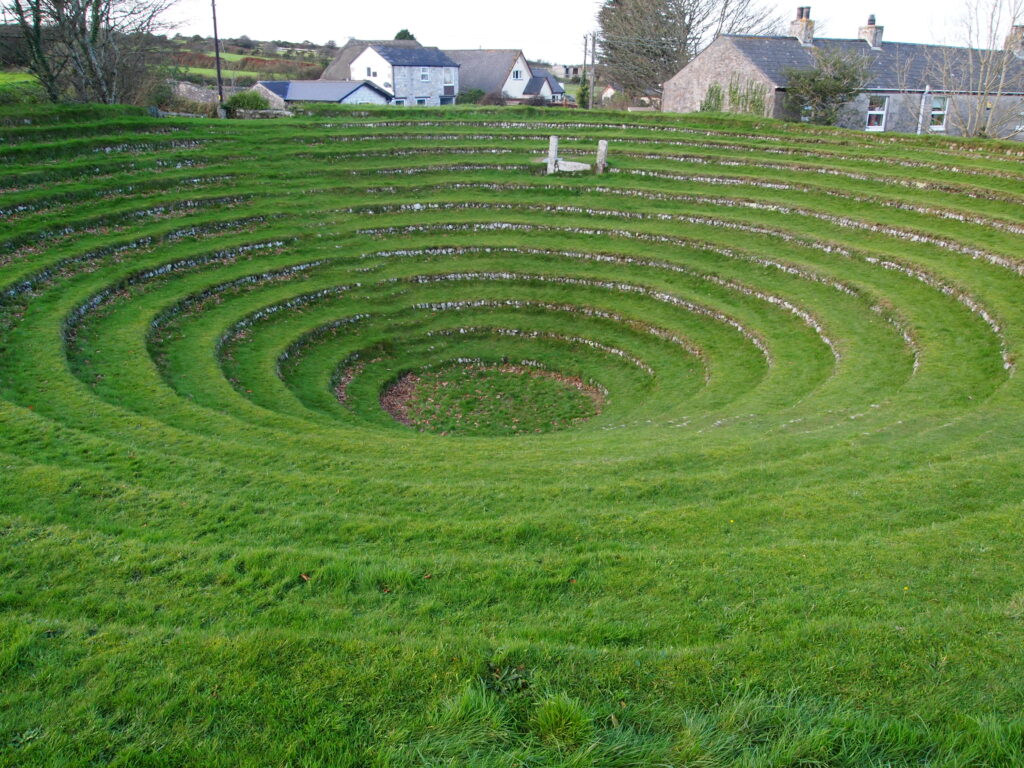
Mining in Gwennap is an industry stretching back to prehistoric times when tin streaming in the Carnon Valley is believed to have occurred. Early evidence of the antiquity of mining in Gwennap is recorded in th early 14th century. Tin raised in Gwennap was dressed and smelted locally. Early modern ‘crazing mills’ powered by water, such as that which existed at Penventon, were built to grind, and later stamp the tin ore. This released cassiterite which was then smelted in local ‘burning houses’. Demand for charcoal in the smelting process rapidly depleted Gwennap’s ancient woodland, leaving a wild, moorland, landscape.
Deep exploitation of the tin lodes was not possible with the limited technology of the early modern period as Cornish mines were wet due to the high rainfall of the area. De-watering workings at depth with ‘rag and chain pumps’, leather bags or ‘kibbles’ (metal buckets) were all ineffective. Deep lode mining was only made possible by two innovations, the first of which occurred in 1748, when John Williams of Scorrier House initiated the construction of the Great County Adit, a phenomenal feat of engineering, which drained mine workings through a system of adits. Over the next century this was extended from Poldice to include many other mines consisting of 63 miles (101 km) of tunnels in all.
By 1779 copper was ousting tin as the main mineral extracted, but it was the period from 1815 to 1840 which was the heyday of mining in Gwennap. This era saw the rise of huge mining enterprises including the Consolidated, United, and Tresavean Mines. Consolidated yielded almost 300,000 tons of copper between 1819 and 1840 which sold for over £2 million. Gwennap the “Copper Kingdom” was then the richest known mineralised area in the world.
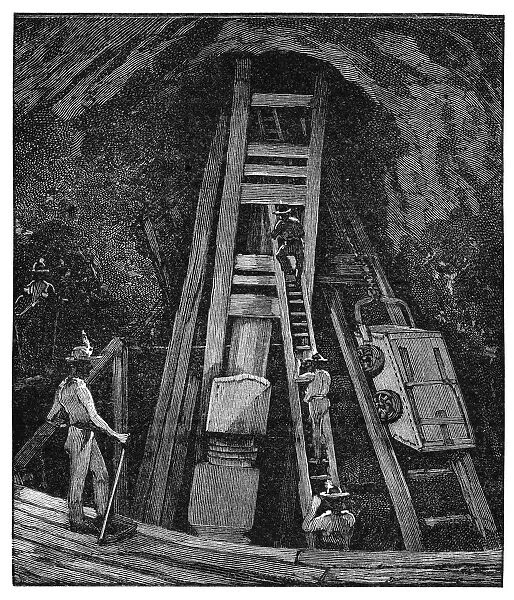
It was a gruelling existence: there were no cages to haul miners up and down the shaft in the early days, although some of the deeper mines later installed man engines, as shown in the posting. The main method of accessing the mine workings was by a series of ladders, sometimes stretching down to depths of 2000 feet or more. Not surprisingly falls were commonplace, particularly at the end of a long shift.
The miners were prone to many different diseases as a result of working daily in hot, damp and dusty conditions underground. Bronchitis, silicosis, TB and rheumatism were all common complaints, making life expectancy short, and few miners in the early days were fit to work beyond the age of 40.
Conditions at the rock face were almost unbearable, temperatures reaching 45C due to the very steep geothermal gradient in Cornish granite. The cramped, hot tunnel ends were occasionally fouled by the stench of human excrement. In such damp, moist conditions, a disease known as ancylostomiasis thrived, the symptoms of which were red skin blotches and anaemia, caused by contact with a parasitic hookworm that lived in human faeces. The air in the mine was polluted by dust and fumes from detonated explosives and could barely sustain a candle, some miners choosing to snub their candles out and work in complete darkness in order to conserve air.
All miners, including the women and children on the surface would work a ten hour day, six days a week in the 19th century, and although many miners and their families lived in cottages rented from the mining company, many would still have to walk several miles to and from work, in clothes wet with sweat from hours of underground toil.
According to an article about the life of a Cornish miner by A K Hamilton Jenkin MA, even when the shift was over, life was hard. Frequently a man would set off from the mine in the darkness of a winter’s night in the pelting rain, and, pursuing his intricate course amidst burrows and streams and unfenced shafts by the light of a glimmering lantern, would at last arrive at his journeys’ end without finding any comfortable meal awaiting him.
A report to commissioners in 1842 says:
“I have known instances where men who had to remain in an atmosphere of 96F whilst at their employ, at a late hour of the night had to walk three miles to their homes. Some of them were too poor to be well clad, and after so frightful a transition of temperature and so long a walk against a fierce and biting wind have often reached home without a fire and had to creep to bed with no more nourishing food and drink than barley-bread or potatoes with cold water”.
Mr Jory Henwood
Life for a miner was a far cry from the romantic view portrayed in so many of today’s tourist brochures and the success of Cornwall’s tin and copper mining industries often overshadows the human cost.
This old miner’s account gives a grim idea of his life.
“Everything was very dear, and the working people were half starved. My father had the standard wages for surface hands, which was £2 5s a month, and I was earning 10s a month, so that £2 15s a month had to provide for five of us. Four our breakfast we had barley gruel, which consisted of about 3 quarts of water and a halfpenny-worth of skimmed milk thickened with barley flour, a concoction which went by the name of ‘sky-blue and sinker’. We lived about half a mile from the mine, and I had to go home to dinner. I can assure the reader that I was sometimes so feeble that I could scarcely crawl along. For dinner we had sometimes a barley pasty with a bit or two of fat pork on the potatoes, and for supper a barley cake or stewed potatoes or turnips with a barley cover.“
The Cornish Miner by A K Hamilton Jenkin, M.A
It’s no wonder that the Trathens left Cornwall to try life elsewhere.