

Annette’s fourth-great grand-aunt and uncle built up a thriving cotton business in the Lancashire mill town of Preston – but he had a tragic end.
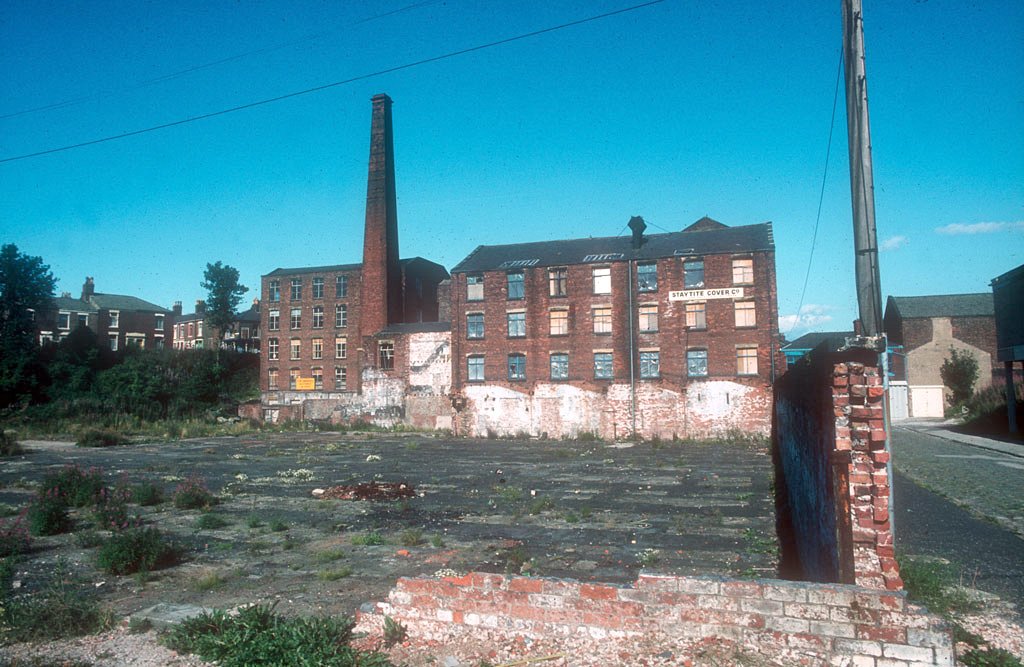
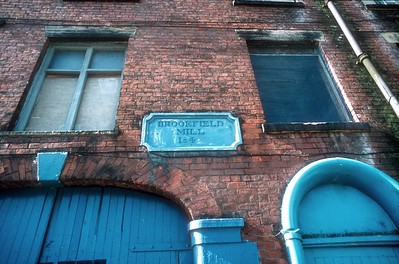
John Goodair was son of a once prosperous London cloth merchant – also John Goodair- who came to grief in Chorley and was made bankrupt. The older John returned to London but the younger one stayed behind, working as a warper in Chorley when he was 13 years old. He became a manager to a Preston manufacturer about 1830, trudging on foot to the country weavers, then set up on his own account ‘as a handloom manufacturer’ in 1836, and entered the ranks of the millowners when he built his first weaving shed in Brookfield in 1843. He employed 500 in 1847.
John Goodair was a self-made man, according to a local newspaper article at the time, as by 1860 he owned two mills in the town – the Peel Hall mill and the Brookfield Mill. Between the two mills, John Goodair and Co ran 1322 looms and 73,591 spindles. He became an Alderman in the town and eventually Mayor of Preston. He was well known at the weekly cotton markets in Liverpool and Manchester,and used to travel there each week by train. In 1872 he decided it was time to take things easy and his son William Henry Goodair took over the marketing side of the business.
He was described as being very energetic, and the Preston Chronicle of January 1870 ran a whole article about him, describing him as ‘a stout looking man, of the weighty and rubicund order, full of vital energy, cuteness and general activity’. Cuteness? How words have changed. It goes on ‘he walks with a homely, rolling waddle and reckons nothing at all of mere external appearances.
But in 1873 there was a serious train crash at a bridge known as German Bridge, just south of the railway station in Preston. A goods train from the north was returning to the main line, when it collided with the Lancashire & Yorkshire Company’s express from Manchester. William was among those injured so John took up the reins of the business again.
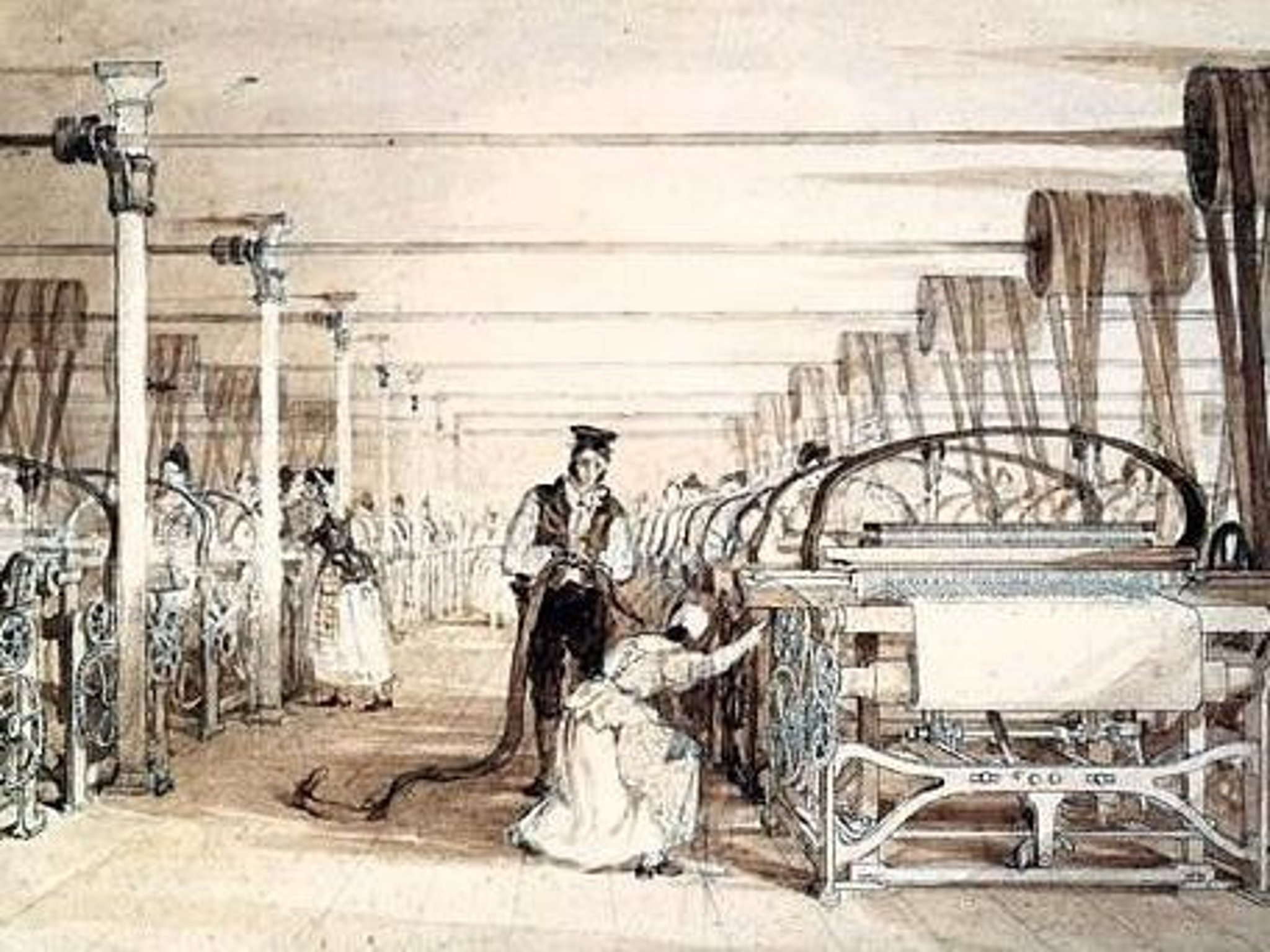
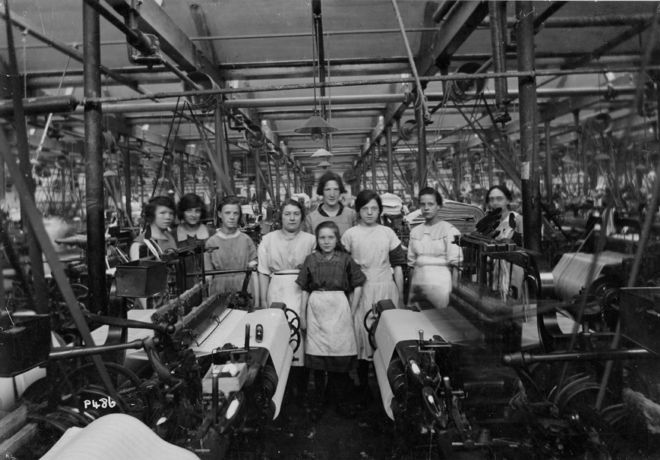
The rise of the cotton mill had changed the nature of Lancashire towns throughout the Victorian era. The website MyLearning.org describes the hard life of mill workers.
The mills were very noisy and dangerous places to work due to the machinery. The workers developed a system of sign language to communicate with each other over the din of the machinery. The mills were also very hot and humid places as this climate kept the cotton in good condition. Many people became ill with respiratory and lung conditions caused by breathing in the cotton dust. The majority of employees were women and children who worked long hours. It was common for adults to work for around 12 to 14 hours a day, and half a day on Saturday, with children working around 6-10 hours a day, with the possibility of time in school on top of that. Despite the long hours and poor conditions, mill workers were generally better paid than other members of the working class.
MyLearning.org
The lives of John Goodair and his weavers were very different. But he worked hard, too, according to the Preston Chronicle. “He gets up every morning before six, sometimes at five,” it says, “has a very short devotional and washing spell and then proceeds to his mills. He always seems in harness, never appears exhausted.” In some ways, he was ahead of his time: “He is no bigot – he respects the opinions of men, and also considers that women are entitled to their rights. The article praises him for his good works – including a £200 scholarship for Preston Grammar School – but then finishes by saying he was ‘a sphinx, a riddle, a perennial caution, puzzling and unreadable to many.” Clearly, he was not someone who would easily be forgotten.
On the second Friday of October 1873, after a hectic day’s business at the Manchester Cotton Markets Mr Goodair was heading to the Victoria railway station when tragedy struck. The Lancashire Post takes up the story:
‘Making his way along Corporation Street, which was crowded with pedestrians and vehicles, he followed behind a couple of gentlemen who were crossing the thoroughfare. Having reached the middle of the road, the other gentlemen took a hurried step to the pavement, having observed a horse-drawn light spring cart heading towards them. Mr Goodair, with his head down and appearing deep in thought, seemed oblivious to the danger and within a moment the horse was upon him. He instinctively seized the horse’s bridle, and by that means kept himself upright when the pony struck him, but the animal, frightened by this movement, plunged forward, and a moment afterwards Mr Goodair fell backwards, with the back of his head striking violently against a kerb stone. A policeman dashed forward and seized the pony’s head, but by this time one of the wheels of the cart had passed over Mr Goodair’s thigh before it could be stopped. In a semi-conscious state, he was rushed to the Manchester Royal Infirmary for treatment.
The fall caused a haemorrhage in the brain, and despite the best effort of the surgeons, he passed away the following Monday morning.
By 11 o’clock that morning, the Coroner was holding an inquest into the death – and after hearing all the evidence declared that no blame could be laid on the shoulders of the 15-year-old boy who had been driving the pony and trap. The jury recorded a verdict of accidental death.
