

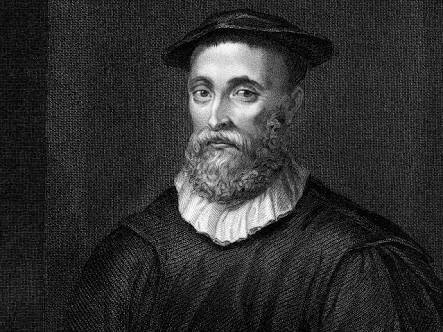
16th Great Uncle
Rev John Knox is our 16th great uncle – his father, Sir Uchtred Knox of Ranfurly is our 16th great grandfather.
He was the foremost leader of the Scottish Reformation, who set the austere moral tone of the Church of Scotland and shaped the democratic form of government it adopted. He was influenced by George Wishart, who was burned for heresy in 1546, and the following year Knox became the spokesman for the Reformation in Scotland. After a period of intermittent imprisonment and exile in England and on the European continent, in 1559 he returned to Scotland, where he supervised the preparation of the constitution and liturgy of the Reformed Church. His most important literary work was his History of the Reformation in Scotland.
His link to us comes through Ruth Trathan, our great-great grandmother who married John Lee. Almost nothing is known of Knox’s early life before 1540. It is known that his father and both Knox’s grandfathers had fought, and two of them had died—perhaps fighting against Henry VIII’s troops at the battle of Flodden.
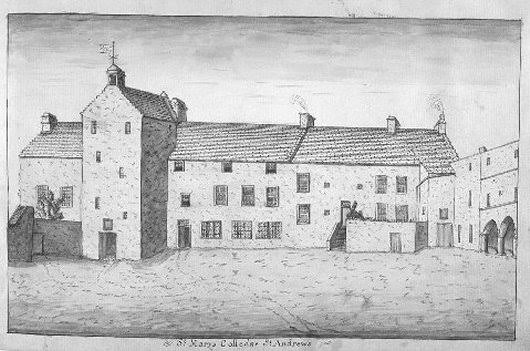
It’s thought he studied for the priesthood at St Andrews University, and by 1543 was practicing as an apostolic notary in the Haddington area.
Knox’s complete conversion to the Reformed faith dates from his contact with the Reformation leader George Wishart, whose memory he cherished ever afterward. Wishart was burned at the stake for heresy in March 1546. Knox, accompanied by his pupils, was moving from place to place to escape persecution and arrest. His desire was to go to Germany to study there at the Protestant seats of learning.
In April 1547, Knox arrived with his pupils in St. Andrews—still an unknown man. The three months that he spent there transformed him, against his own predisposition, into the acknowledged spokesman and protagonist of the Reformation movement in Scotland. The Protestants in the castle had become involved in controversy with the university; several of them, becoming aware that a man of uncommon gifts had joined them, pressed upon Knox his duty of taking up “the public office and charge of preaching.” Knox’s inclination was for the quiet of the study and the schoolroom, not for the responsibilities and perils of the life of a preacher of a proscribed and persecuted faith. He resisted the call with tears, and only after great hesitation was he persuaded to preach in the town of St. Andrews a sermon that convinced friend and foe alike that the great spokesman of Scottish Protestantism had been found. This was the turning point of Knox’s life; from this time forward he regarded himself as called to preaching by God, and he was the more certain of the divine origin and compulsion of the call in that it ran counter to every inclination of his own.
In England the Protestant government of Edward VI was endeavouring to hurry clergy and people into the Reformation faster, if anything, than most of them were willing to go. For this program preachers and propagandists were urgently required; and because a return to a Scotland under Roman Catholic rule was impossible for Knox at this time, the English government promptly made him one of a select corps of licensed preachers and sent him north to propagate the Reformation in the turbulent garrison town of Berwick On Tweed. He brought order to the town and established a congregation on Puritan lines, and there he met Marjorie Bowes, who was to become his wife.
After Mary Tudor became Queen in 1553, Knox fled to the continent like many Protestant preachers. Geneva was to Knox a beloved city in which he spent the happiest years of his life, highly esteemed, in peace, and among kindred souls. From this period (1556–58) dates his elaborate and rather tedious treatise on Predestination as well as his first blast of the trumpet against the monstruous regiment [rule] of women, in which he states with uncurbed vehemence the common belief of his day that the exercise of authority by women is contrary to both natural law and revealed religion. The pamphlet was aimed at the three women who were holding the reins of government in England, France, and Scotland and were oppressing Protestantism; but, unfortunately for Knox, publication coincided with the accession in England of the Protestant Elizabeth I, who indignantly and permanently debarred the rash author from her realm.
Knox, aided by a committee of distinguished churchmen, laid before the Scottish Parliament the First Book of Disciplinecontaining proposals for the constitution and finance of the Reformed Church. Worship was to be regulated by the Book of Common Order (also called Knox’s Liturgy), according to which congregations were to be governed by elders elected annually by the people and the elders were to aid the minister to maintain firm moral discipline among the people. Ministers were to be elected by the people but to be appointed only after rigorous examination of life and doctrine by their ministerial brethren. The ablest ministers were to be appointed superintendents of areas roughly corresponding to the old dioceses; they were to supervise the ministers and congregations in the area and were to be assisted by provincial synods of ministers and elders. In the high place given to the laity, Knox’s system contains the most essential element of later Presbyterianism.
Knox was a controversial figure, and his influence will always be variously assessed by men of differing religious and political views. Certainly his conviction that the Reformation was God’s cause and must triumph, a conviction he had a remarkable power of impressing upon other minds, was the rock upon which the Reformed Church in Scotland was built. His power as a preacher lay in his capacity to fuse reason with emotion and to be a passionate logician in the pulpit. Intolerant he undoubtedly was, but his Calvinism was a good deal more moderate than that of a later age. He was more temperate in action than in speech, and his private letters reveal an unexpected tenderness. His single-minded, lifelong, and incorruptible devotion to what he believed to be his duty must command respect. There is ample historical testimony that his moral life was in keeping with his rigorous creed.
This article is based on a longer entry in the Encyclopaedia Brittanica