

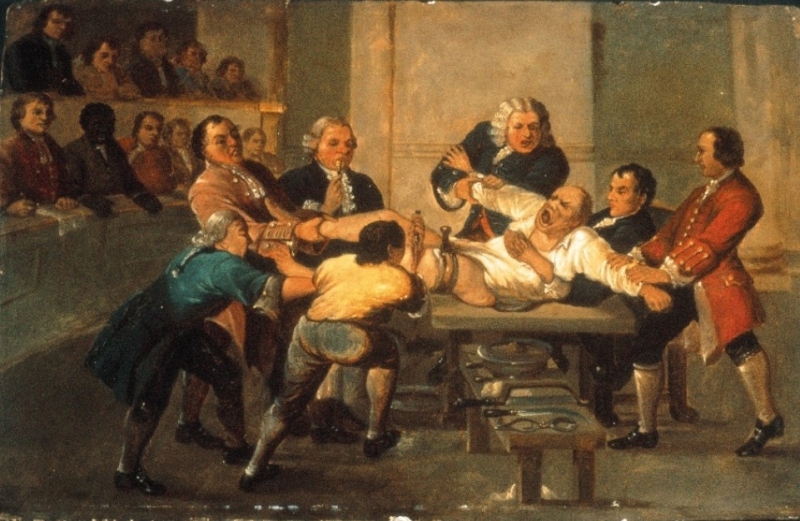
3rd great grandfather Richard Montprivat
Richard Montprivat was apparently born Richard Ledwell in 1781. He obviously changed his name at some stage, although exactly how and when does not seem to have been recorded.
In 1802 he is listed as living in Upper Cleveland Street, at Fitzroy Square, where he is said to be a ‘cow keeper’. In the 19th century, before the days of refrigeration, most foods were eaten fresh, this being the case with milk as well. The problem facing city dwellers was how to ensure that milk is delivered fresh, when farms were hours or even days away. The answer was keep the cows locally. In the cities and large towns there would be numerous cow-keepers each owning one or two cows. The cows would be milked early in the morning then driven to a stretch of common land where they would graze during the day and be driven home in the afternoon in time for milking again.

The milk would be delivered in large churns, either by cart or by using two slung over the shoulders on a yolk. Customers would provide jugs for the milk to be ladled into then on to the next customer.
Today a cow would be hardpressed to find any grass around Fitzroy Square, which was a speculative development intended to provide London residences for aristocratic families, and was built in four stages with the first leases becoming available in the 1790s. However, the Napoleonic Wars brought the development to a halt and a slump in the London property market brought a temporary stop to construction of the square after the south and east sides were completed. According to the records of the Squares Frontagers’ Committee, 1815 residents looked out on “vacant ground, the resort of the idle and profligate”. Presumably, that was the ground where Richard’s cows grazed.
Richard married his first wife, Caroline Mary Hayes, in 1817, and by this stage, Richard had become Montprivet, or Monprivatt, or any one of a dozen other different spellings. Their first child, also Caroline, was born a year later but Caroline Mary died after the birth. A year later, Richard married Caroline’s older sister, Julia Anna Hayes.
Meanwhile, another of Caroline and Julia’s sisters, Laura Hayes, became the second wife of James Mann, the fifth Earl Cornwallis:
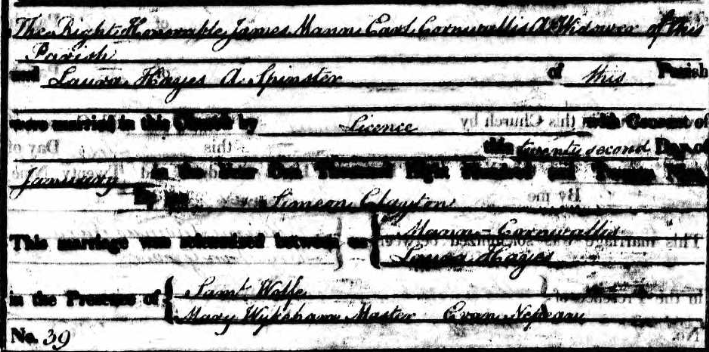
And this is where it starts to get messy. According to court records from 1834, Richard was charged with with ‘having written and circulated certain letters with intent to injure and aggrieve the Earl and Countess Cornwallis,to destroy their domestic peace, and to bring them into public scandal’.
The Spectator at the time published this account of the case:
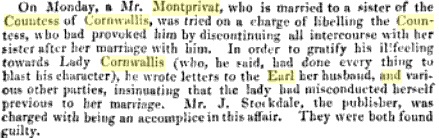
The report in the Times goes into excruciating detail and doesn’t spare the blushes of the Countess – “Earl Cornwallis married Louisa Hayes, a lady of inferior rank”.
The Times report continues:
Lady Cornwallis, who highly disapproved of this new alliance, ceased to have any personal communication with her sister, or her husband, but afforded her relief from time to time, the defendant being in bad circumstances. The defendant, probably with a view to obtain more money, wrote to the Noble, stating that he had heard reports highly prejudicial to the honour of the Countess, which, as a near relative, he felt it his duty to investigate, with a view to clear her character. He afterwards wrote several other letters to other persons, in which he enclosed copies of the letter written to Earl Cornwallis and an alleged affidavit before the Lord Mayor, in which he stated that he had heard from persons whose names he did not mention facts concerning the Countess Cornwallis, which had led him to make inquiry into their truth, and that because he had done so out of most pure and disinterested friendship, and with no other view than that of clearing the character of the Countess from the imputations cast upon it, he had been persecuted by the Noble Earl and his Lady, and represented as a libeller.
Court Report
Richard’s partner in crime and codefendant was J J Stockdale, who had published the Memoirs of Harriette Wilson, a Regency era courtesan who became the mistress of Lord Craven when she was 18 years old. Later in her career, she went on to have formal relationship arrangements with Arthur Wellesley, the Duke of Wellington and other significant politicians. No wonder the Cornwallises were worried.
Richard claimed that the Countess Cornwallis had done every thing in her power to injure him, stated that he was a man of ‘very bad character’, and that if he could but be sent to Botany Bay, she would be very glad to protect his wife; and as a second ground of defence, he urged, that in writing the letters, he had been actuated solely by a desire to vindicate the honour and reputation of the Countess.
Well, he didn’t get sent to Botany Bay, but he was found guilty.
However, it doesn’t seem to have stopped Richard’s upward mobility. By the time his daughter Emma got married in 1850, his occupation was put down as a ‘surgeon’.
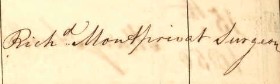
I’m not sure I would have wanted Richard coming too close to me with a sharp instrument. Surgery in the mid-nineteenth century was not like it is today. An article in The Washington Post is headlined “Screams, torture and so much blood”, which isn’t encouraging… It goes on to say “Chances of post-surgery survival were so low that hospitals often forced patients to pay upfront. The concept of hygiene was completely foreign, with vermin and bugs living alongside patients in medical wards. Surgeons proudly reused the same stained tools and blood-soaked aprons in operation after operation.”
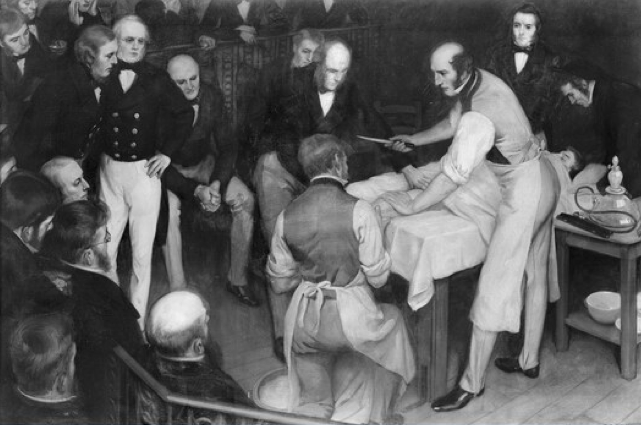
The Washington Post article goes on to say surgeons in that era were more prized for speed and ferocity than skill. Many didn’t attend university or medical school and some were even illiterate. One of the more renowned surgeons in 19th-century London was Robert Liston, who was something of a cross between a carnival barker and cattle-floor butcher. It was said that he could take apart a man’s leg in 30 seconds. During one of his most infamous operations, he was said to have been moving so fast, he accidentally took off his assistant’s fingers.

So probably a relief then, to see that by the time of the 1851 census, Richard had retired – his entry says ‘Medical, retired’. He died five years later in 1856.
So from being a ‘cow keeper’ in a less than salubrious part of London to being a surgeon, via a libel case taken out by the great and good, Richard’s life was nothing if not eventful, and just a bit mysterious,