

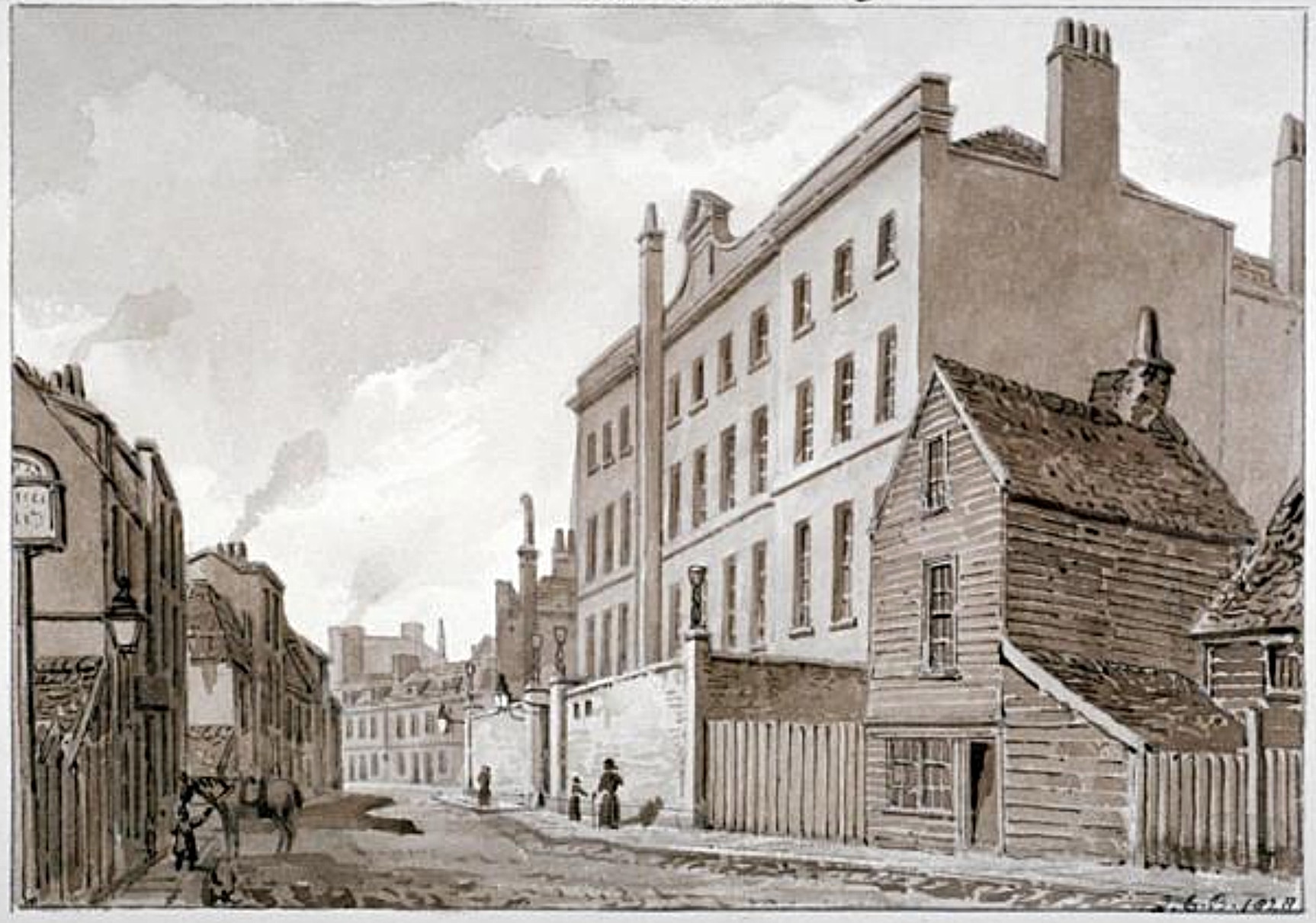
Great Grandfather Alfred Swain found himself in the Workhouse in Bermondsey in southeast London for a year at the age of 14. Children in the workhouse during the Victorian period experienced poor conditions, limited education and hard work.
When I was growing up, my grandmother, Rose, used to entertain us with Victorian recitations she’d learned as a child. One of them was:
It is Christmas Day in the Workhouse,
And the cold bare walls are bright
With garlands of green and holly,
And the place is a pleasant sight:
For with clean-washed hands and faces,
In a long and hungry line
The paupers sit at the tables
For this is the hour they dine.
The poem, by Victorian social campaigner George Robert Sims, was at one stage the most performed recitation in the English Language. Further on in the poem, things turn dark, as one of the paupers stands up, turns away from the meal provided by the great and good who were present to watch, and launches a verbal attack on his would-be benefactors.
He looked at the guardians’ ladies,
Then, eyeing their lords, he said,
“I eat not the food of villains
Whose hands are foul and red:Whose victims cry for vengeance
From their dank, unhallowed graves.”
What we never understood as children, as we shivered in horror at the picture painted by the poem, was that the experience of the paupers was closer than we knew. For Rose’s father, our great-grandfather Alfred Swain, had spent a year as a teenager in the workhouse in Bermondsey.
Workhouses were huge buildings built to accommodate as many as 1000 paupers. If you were poor, unemployed and able-bodied, you were expected to enter the workhouse. Since the alternative was homelessness, begging and the threat of prison, it’s not surprising they were successful.
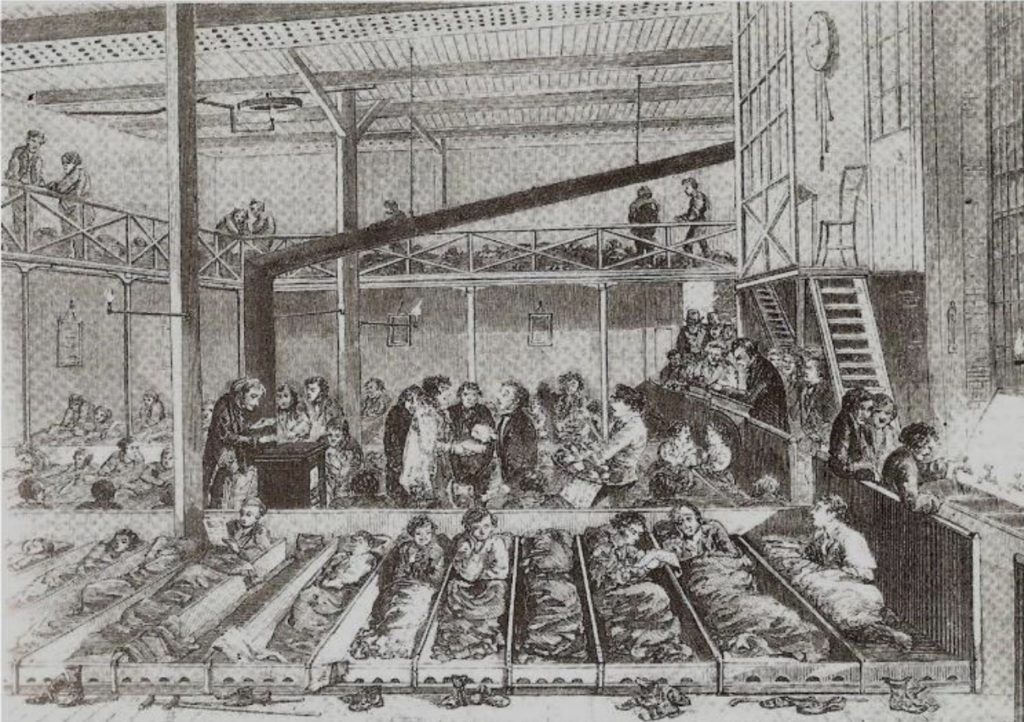
Most children in the workhouse were orphans. Everyone slept in large dormitories. It was common for girls to sleep four to a bed. Every day for three hours, children were expected to have lessons in reading, writing, arithmetic and Christian religion.
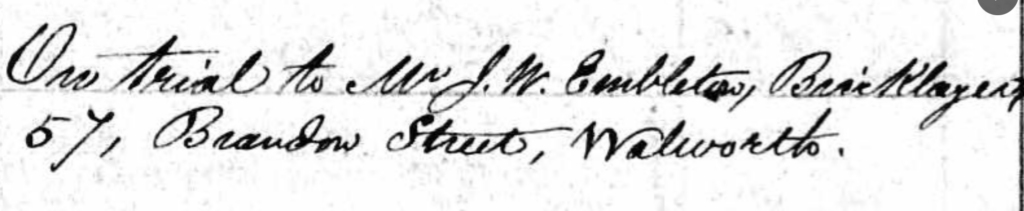
Alfred is listed in the Bermondsey Workhouse records as an orphan, which is odd, given his parents were actually still alive. But this may have been a way for Alfred to learn a trade, which he did, being assigned to a bricklayer, Mr J W Embleton of Walworth. For Alfred, it worked – he worked as a bricklayer for the rest of his life
Life in the workhouse was grim. It was required to be less attractive than even the lowest paid work. One clergyman was of the opinion: ‘The workhouse should be a place of hardship, of coarse fare, of degradation and humility; it should be administered with strictness and severity. It should be as repulsive as is consistent with humanity.’
The workhouse was usually overseen by a married couple. Men and women inmates were required to wear a uniform. In the Bermondsey workhouse women inmates had short-sleeved gowns made from thickly woven material known as ‘stuff’, wool petticoats, black stockings, cotton chemise, leather shoes and black mittens. Men wore coat and waistcoats of cloth with red collar, white metal buttons, olive corduroy trousers, cotton shirts, strong shoes and coarse hats.
In 1838, Assistant Poor Law Commissioner Dr James Phillips Kay noted that children who ended up in the workhouse included “orphans, or deserted children, or bastards, or children of idiots, or of cripples, or of felons.”
Sleeping arrangement were uncomfortable, to say the least – some were even made to sleep in orange boxes.
Much of Bermondsey was low-lying and then without embankments to protect the area from flooding. The Lancet (4 Nov 1865), in a report on the conditions at the Russell Street workhouse, noted; “The whole site is below high-water mark, and formerly was part of the bed of the Thames. The consequence of this is that the house is often flooded, the water standing two feet deep in the basement“. This was just a couple of years after Alfred left.
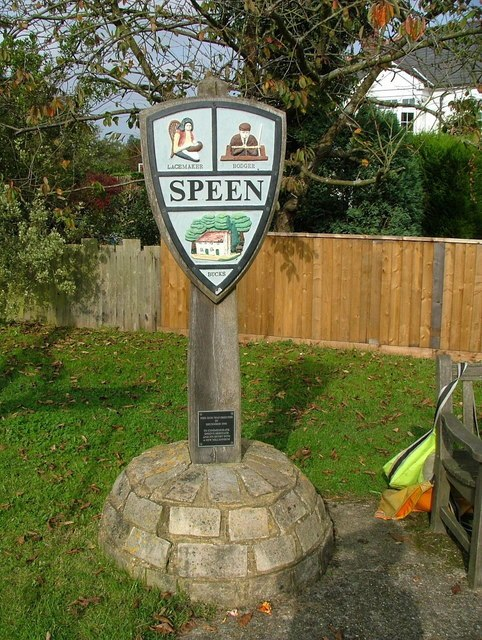
And on 2nd April 1861. at the age of 14, Alfred left the workhouse, and by 1871 was married, and was using the skills he learned in the workhouse, living in the village of Speen.
Alfred would be counted as a success story by the workhouse system. But there is no escaping the fact that living in the workhouse meant that even though the basic physical needs of the children at the time were accounted for, it also meant sacrificing a childhood through no fault of their own.
As the 19th century wore on, workhouses increasingly became refuges for the elderly, infirm, and sick rather than the able-bodied poor, and in 1929 legislation was passed to allow local authorities to take over workhouse infirmaries as municipal hospitals. Although workhouses were formally abolished by the same legislation in 1930, many continued under their new appellation of Public Assistance Institutions under the control of local authorities.
It wasn’t until after the Second World War that the last vestiges of the Poor Law finally disappeared, and with them the workhouses.