
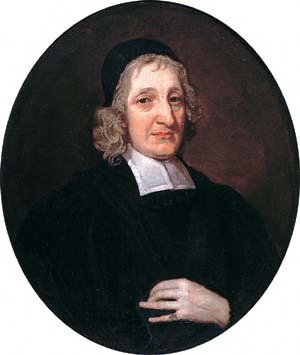
Tenth-great grandfather John Paterson was the last Protestant Archbishop of Glasgow and the last churchman to be automatically appointed Chancellor of the University of Glasgow. And his enemies say he was ‘one of the most notorious liars of his time, and a vicious, base, loose liver’.
John Paterson was born in 1632, was eldest son of John Paterson, bishop of Ross. He studied theology at the University of St Andrews, and on 24 October 1662 he was elected by the town council of Edinburgh as minister of the Tron Church, and was admitted on 4 January following. From that charge he was promoted to the deanery of the High Kirk of Edinburgh (St Giles) on 12 July 1672, and was admitted a burgess and guild-brother of the city on 13 November 1673. Through the influence of his patron, the Duke of Lauderdale, he was appointed on 20 Oct. 1674 to the see of Galloway. Five years later he was appointed Bishop of Edinburgh.
John expressed an opinion, that “the two religions ( Popish and Protestant ) were equally poised in his mind, and that it was due to a few grains of loyalty, in which the protestants had the better, that turned the balance for him.”
In March of 1686, he went to London to assure King James II that the Scottish bishops would support his Toleration Act of 1689 which gave all non-conformists, except Roman Catholics, freedom of worship, thus rewarding Protestant dissenters for their refusal to side with James II. They had to promise to be loyal to the British ruler and their heirs.
As a reward, he was appointed to be Archbishop of Glasgow.
According to the Dictionary of National Biography, his enemies were not fond of him.
He actively engaged in all the intolerant measures of the government, and opposed, until the accession of James II, the granting of all indulgences ; adhering to James, he was banished from Scotland before 1696; restored in Queen Anne’s reign. His character was painted by his opponents in the blackest colours.
Dictionary of National Biography
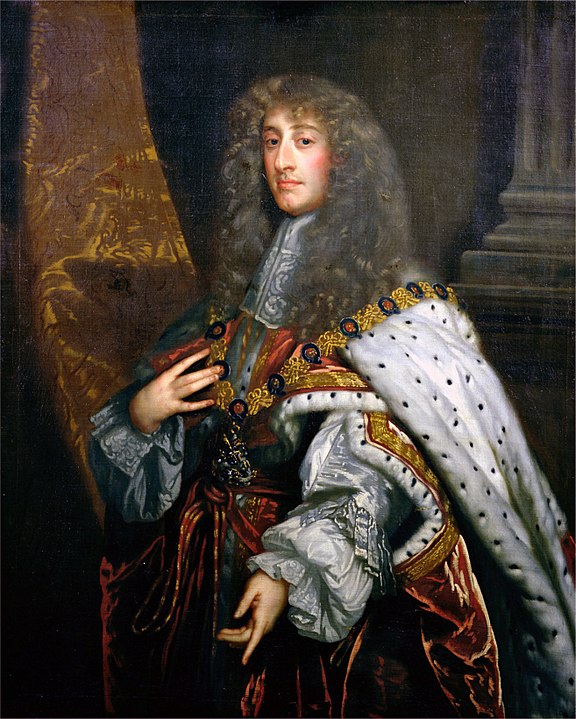
The Archbishop’s attachment to King James II (of England, James VII of Scotland) was a problem. He was the last Catholic monarch of England, Scotland, and Ireland. His reign is now remembered primarily for conflicts over religious tolerance. He was deposed in 1688 and replaced by his Protestant daughter Mary II and her husband William III of Orange, and de facto ruler of the Dutch Republic in the so-called ‘Glorious Revolution’.
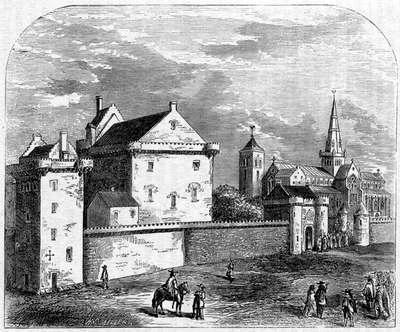
When a riot broke out in the 1689 revolution John, retired into his palace for the winter, the Bishop’s Castle of Glagow. There he kept behind the high walls, and he piled stones on the gatehouse roof ready ‘for throwing down in case the rabble should have made any attempt upon him’. Luckily, they weren’t needed
He remained in Edinburgh, living in privacy, after the Revolution, but is said to have been arrested in 1692 on suspicion of holding correspondence with the exiled court, and to have been imprisoned in Edinburgh Castle. At some date previous to 1695, he was banished from Scotland to England, and was restrained to London. Among the papers of the Earl of Rosslyn at Dysart House there is a journal kept by Paterson in London in 1695–6, in which he records interviews with statesmen while seeking permission from King William III to return to Scotland. Leave was at that time refused, and he was also forbidden to reside in any of the northern counties of England. He was, however, shortly afterwards permitted to return to Edinburgh, and probably regained complete liberty upon the accession of Queen Anne in 1702.
He exerted himself in the following years, together with the other Scottish bishops, in endeavouring to obtain grants from the government for relief of poor clergymen, as well as some allowance for themselves out of the revenues of their sees.
While his opponents might have seen him as an enemy, his supporters say he was a very respectable and humane man who often saved the people from the violence of the soldiers. John wrote in several letters references about his numerous family. His wife, Margaret, died in 1696. That same year he recieved a proposal from Lady Warner but he chose to remain alone. John died in his Edinburgh home at the age of 76 and was buried in the Chapel Royal of Holyrood, at the east end of the north side, at the foot of Bishop Wishart’s monument.