

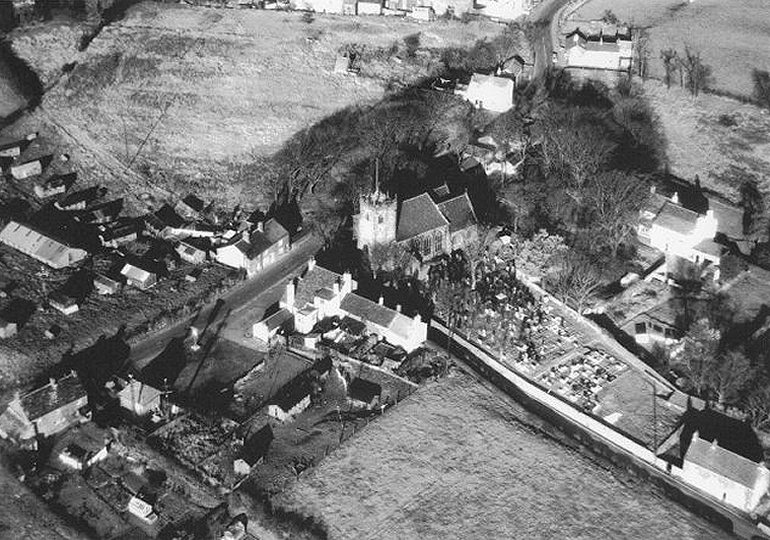
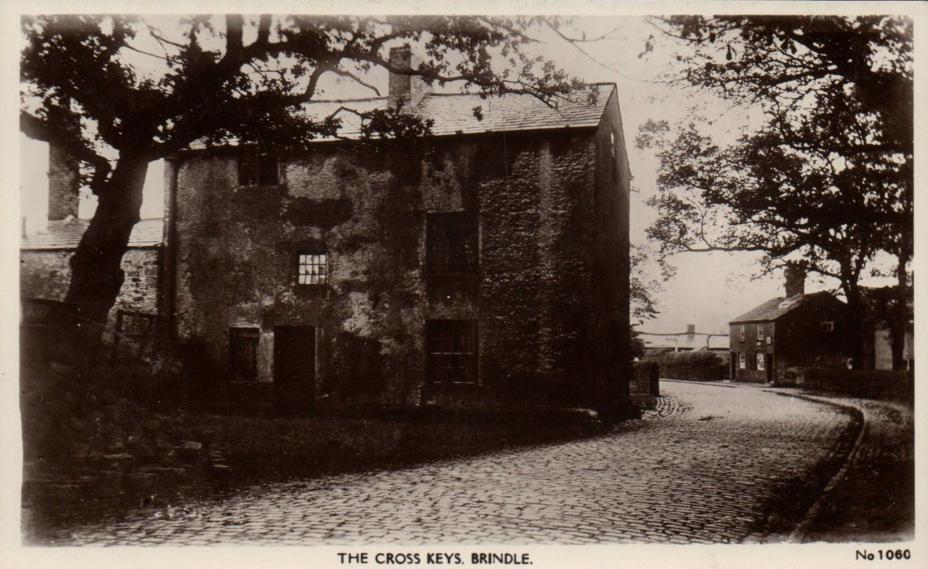
Fourth-great-grandparents Richard and Mary Burton took on the Cross Keys Inn in Brindle in Lancashire in the 1860s. According to earlier Census forms, he and Mary were farming 35 acres in the village – and it was not uncommon for inns of the time to be attached to a farm. By the 1861, Richard was listed as the Innkeeper at the Cross Keys, while his wife Mary and daughter Agnes were listed as barmaids.
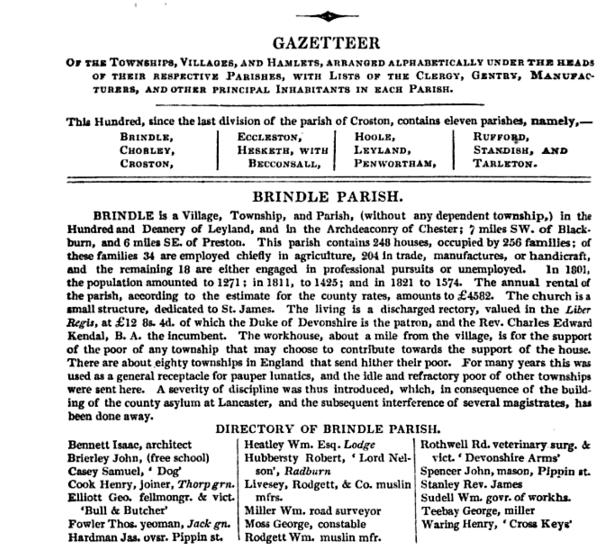
According to the Chorley Inns blog the first record of the Inn is in 1825, where it is mentioned in the Village Directory with the Innkeeper mentioned as Henry Waring.
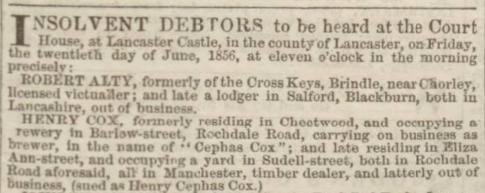
The Innkeeper before Richard was Robert Alty, who n 1856 ended up as an insolvent debtor, with a hearing in Lancaster Court.
In 1828 a new Alehouses Act followed by the Beerhouse Act of 1830 overhauled the system creating looser regulations for those applying for a licence which resulted in a significant rise in the numbers of licensed premises selling alcohol. As a result, drinking in pubs became increasingly popular in the 19th century.
Landlords had to declare that they would not operate a disorderly pub and enter into certain obligations before the court could issue a license. This form of legal pledge or obligation is known as a Recognizance or Bond. The relevant information may appear under the heading of ‘Register of recognizances of licensed victuallers’. Landlords that failed to adhere to these requirements would appear before the Quarter or Petty Sessions on charges of ‘keeping a disorderly house’.
Originally beerhouses and alehouses only sold ale or beer whilst taverns sold additional beverages such as wine and spirits. Inns and especially coaching inns were bigger establishments offering larger more comfortable rooms and accommodation.
It was during these middle decades of the nineteenth century that the word ‘pub’ – and indeed the concept of a village hostelry – became common. The Cross Keys was certainly at the heart of village life – there are many reports of inquests and public meetings behind held at the Inn during this time.
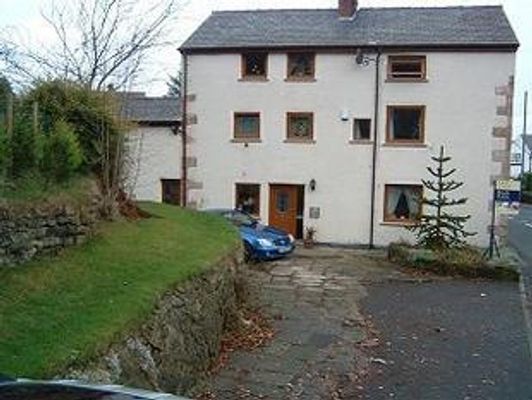
Today, the building has been turned into three private homes – its days as a pub are over.
As for Richard and Mary and their children, by the time of the 1871 Census, they had gone back to farming and at the age of 68 he was running a dairy farm of 45 acres, with some of his grown up children working as milkmaids and cowmen.