

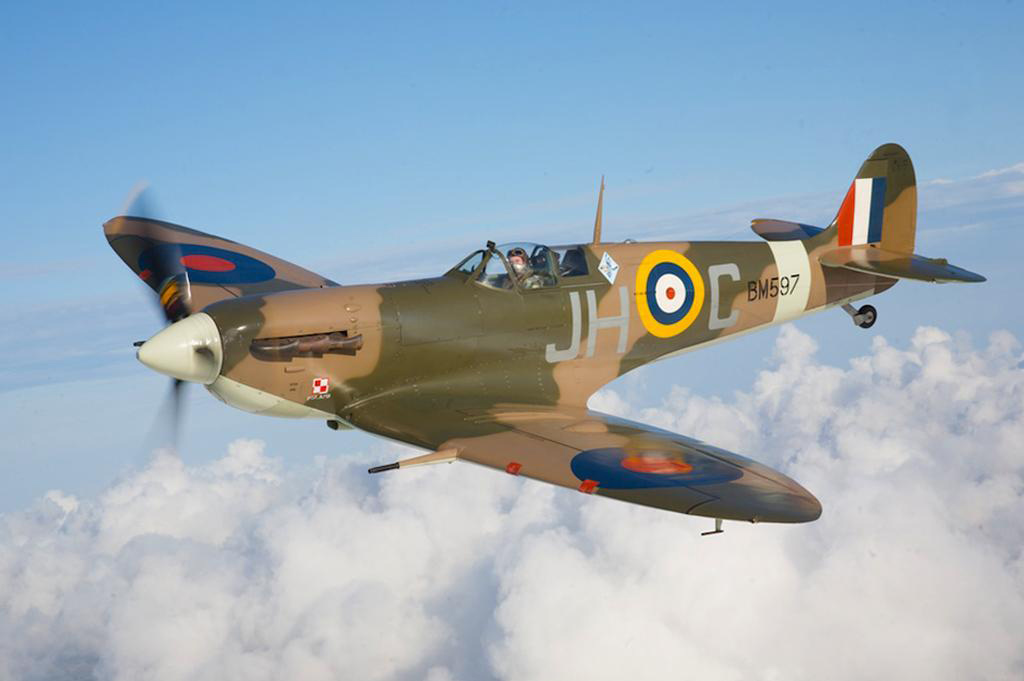
Uncle Allan was a Spitfire pilot during World War 2. He lost his life after taking part in the Allies’ disastrous raid on Dieppe. He was just 21.
Allan Lee was born in July, 1921 in Bramley, in Yorkshire. When the Second World War broke out, he was 18 years old. He joined the RAF Volunteer Reserve, and became a Spitfire pilot with 501 Squadron. 501 Squadron was the 14th of the 21 flying units in the Royal Auxiliary Air Force, the volunteer reserve part of the British Royal Air Force. The squadron won seven battle honours, flying Hurricane, Spitfire and Tempest fighter aircraft during World War II, and was one of the most heavily engaged units in RAF Fighter Command. In particular, the Squadron saw extensive action during the Battle of France and Battle of Britain.
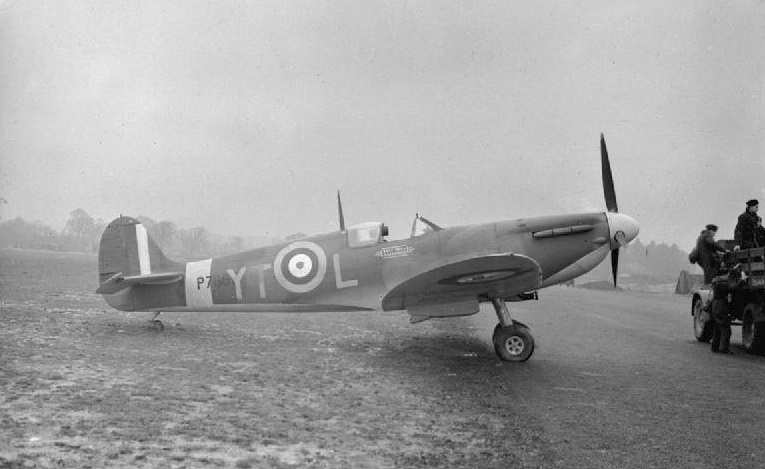
In July 1942, the squadron moved to RAF Tangmere, near the village of Tangmere in West Sussex, ahead of Operation Jubilee, a raid planned on the northern French port of Dieppe.
The aerodrome was founded in 1917 for use by the Royal Flying Corps as a training base. In 1939 the airfield was enlarged to defend the south coast against attack by the Luftwaffe, with Tangmere’s only hotel and some houses being demolished in the process. The RAF commandeered the majority of houses in the centre of the village, with only six to eight families being allowed to stay. The village would not resume its status as a civilian community until 1966.
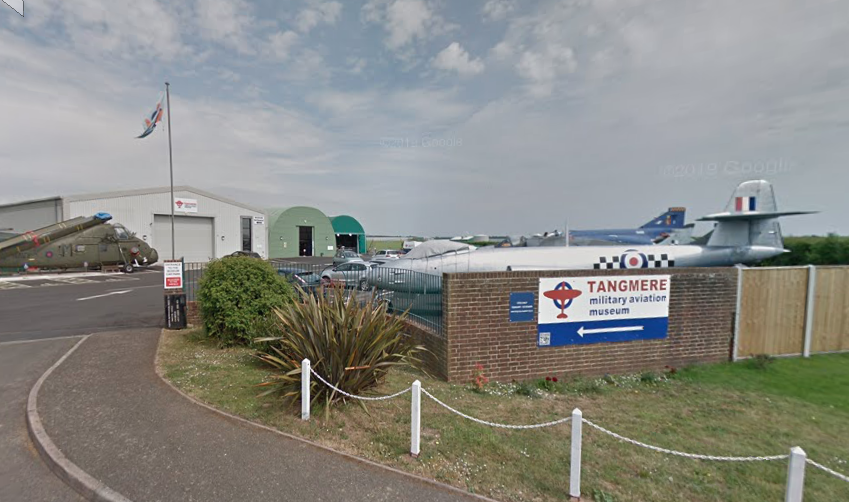
RAF Tangmere became famous for its role in the Battle of Britain. The famous Second World War aces Wing Commander Douglas Bader, and the then inexperienced Johnnie Johnson were stationed at Tangmere in 1941.Johnson went on to become the highest scoring Western Allied fighter ace against the Luftwaffe.
Operation Jubilee – or the Dieppe Raid – was an Allied amphibious attack on the German-occupied port of Dieppe. More than 6,050 infantry, predominantly Canadian, supported by a regiment of tanks, were put ashore from a naval force operating under the protection of RAF fighters.
The port was to be captured and held for a short period, to test the feasibility of a landing and to gather intelligence. German coastal defences, port structures and important buildings were to be demolished. The raid was intended to boost Allied morale, demonstrate the commitment of the United Kingdom to re-open the Western Front and support the Soviet Union.
Aerial and naval support was insufficient to enable the ground forces to achieve their objectives; the tanks were trapped on the beach and the infantry was largely prevented from entering the town by obstacles and German fire. After less than six hours, mounting casualties forced a retreat. The operation was a fiasco in which only one landing force achieved its objective and some intelligence including electronic intelligence was gathered.
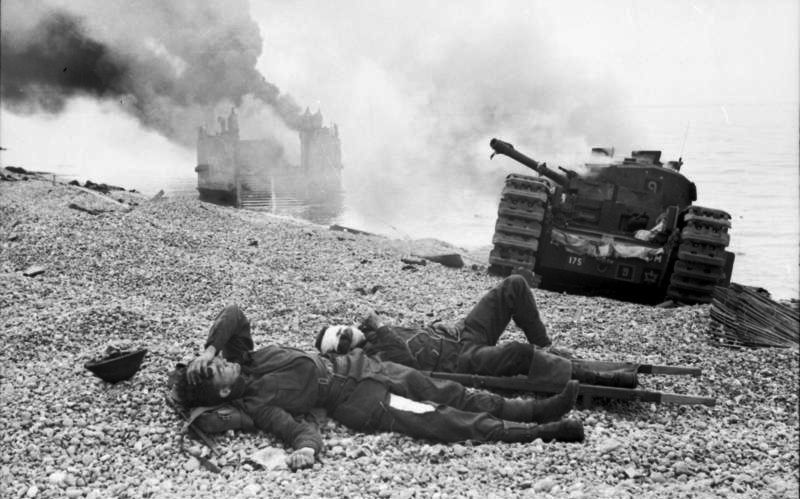
Allan was part of the RAF operation, detailed to carry out reconnaisance over Dieppe. Family belief is that his Spitfire was damaged by enemy fire, and he tried to make it back to Tangmere. The official record is that his aircraft crashed in poor visibility at Tolhurst Farm, 17 km north of the airfield. The aircraft was destroyed and Allan was killed.
Within ten hours, of the 6,086 men who landed at Dieppe, 3,623 had been killed, wounded or became prisoners of war. The Luftwaffe made a maximum effort against the landing as the RAF had expected, but the RAF lost 106 aircraft (at least 32 to anti-aircraft fire or accidents) against 48 German losses. The Royal Navy lost 33 landing craft and a destroyer.
Prime Minister Winston Churchill and Admiral Louis Mountbatten both claimed that the lessons learned had outweighed the cost – lessons that influenced the success of the D-Day landings. Artificial harbours were declared crucial, tanks were adapted specifically for beaches, a new integrated tactical air force strengthened ground support, and capturing a major port at the outset was no longer seen as a priority.
Senior German officers were unimpressed by the operation; General Konrad Haase considered it “incomprehensible” that a division was expected to overrun a German regiment that was supported by artillery, saying “…the strength of naval and air forces was entirely insufficient to suppress the defenders during the landings”. It was a Nazi propaganda coup in which the Dieppe raid was described as a military joke, noting the amount of time needed to plan such an attack, combined with the losses suffered by the Allies, pointed only to incompetence.
But Admiral Mountbatter later claimed, “I have no doubt that the Battle of Normandy was won on the beaches of Dieppe. For every man who died in Dieppe, at least 10 more must have been spared in Normandy in 1944.”
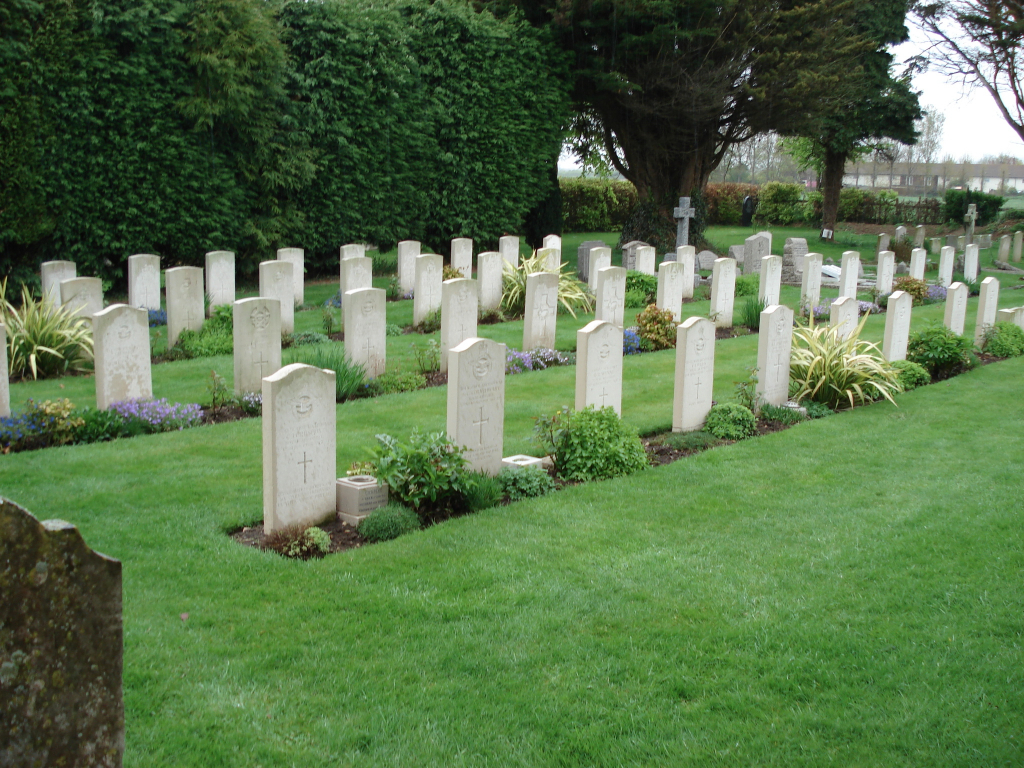
Allan is buried in Tangmere’s little village church of St Andrew’s. The inscription from his parents – our grandparents – Beatrice and Allan reads “IN EVER LOVING MEMORY OF OUR DEAR SON ALLAN, KILLED WHILST FLYING IN THE RAID ON DIEPPE”.
Not long after this, Allan and Beatrice were informed that their middle son, Ralph, was also missing presumed lost – but thankfully, he returned at the end of the war after working with the Greek resistance.