
Mary Jemison – our first cousin eight times removed (check the line here!) – was captured by Shawnee Indians as a child, adopted into the Seneca tribe, and chose to live her life as a Seneca woman.
Early life
Mary Jemison’s life didn’t start easily – she was born aboard a ship, the William and Mary, in the autumn of 1743, while her family was on their way to America from what is now Northern Ireland. They landed in Philadelphia and travelled west, along with other Protestant Scots-Irish immigrants, to settle in what is now central Pennsylvania. Once there, the Jemisons cleared land to develop their farm, and the couple had several children. By 1755, conflicts had started in the French and Indian War, the North American front of the Seven Years’ War between France and Britain. Both sides made use of Native American allies, especially in the frontier areas where they had few regular forces.
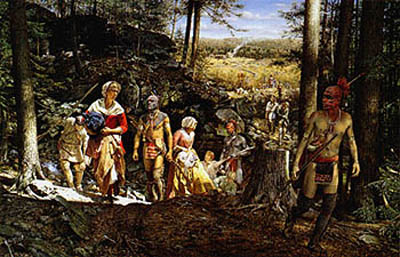
The Jemisons’ life as farming pioneers came to an abrupt end one morning in early 1755. A raiding party consisting of six Shawnee Indians and four Frenchmen captured Mary, the rest of her family (except two older brothers), and a young boy from another family. It was a Seneca custom, when one of their own was killed or taken prisoner in battle, to take an enemy as prisoner or to take their scalp in a mourning ritual. Two Seneca women had lost a brother in the French and Indian War a year before Mary’s capture, and in this ‘mourning raid,’ the Shawnee intended to capture a prisoner or obtain an enemy’s scalp to compensate them.
She later described what happened:
On our march that day, an Indian went behind us with a whip, with which he frequently lashed the children, to make them keep up. In this manner we traveled till dark, without a mouthful of food or a drop of water, although we had not eaten since the night before. Whenever the little children cried for water, the Indians would make them drink urine, or go thirsty. At night they encamped in the woods, without fire and without shelter, where we were watched with the greatest vigilance. Extremely fatigued, and very hungry, we were compelled to lie upon the ground, without supper or a drop of water to satisfy the cravings of our appetites. As in the daytime, so the little ones were made to drink urine in the night, if they cried for water. Fatigue alone brought us a little sleep for the refreshment of our weary limbs; and at the dawn of day we were again started on our march, in the same order that we had proceeded the day before.
Mary Jemison’s own account
En route to French-controlled Fort Duquesne (the present-day Pittsburgh), the Shawnee killed Mary’s mother, father, and siblings, and ritually scalped them. The 12-year-old Mary and the young boy were spared, likely because they were of suitable age for adoption.
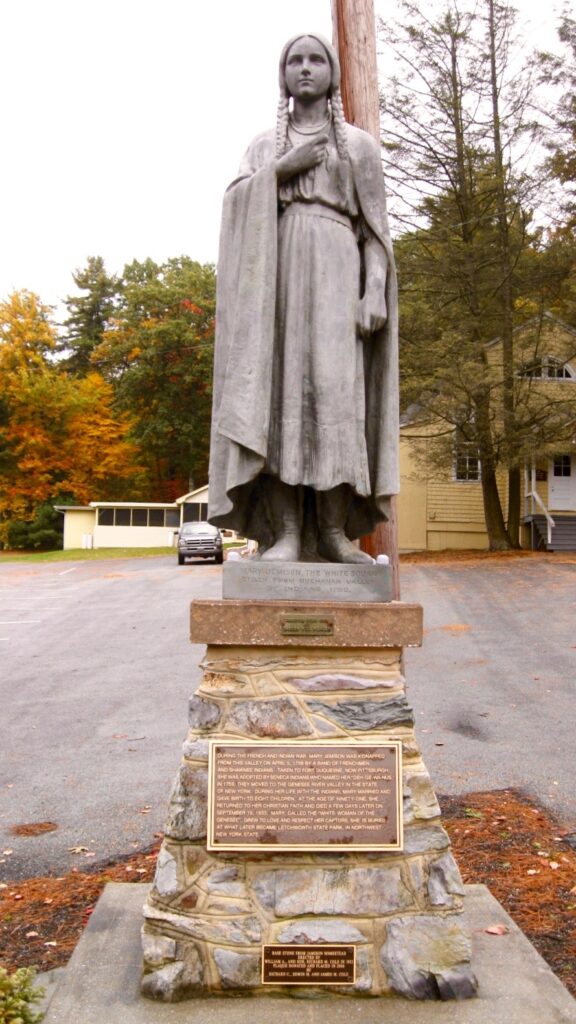
Once the party reached Fort Duquesne, Mary was given to the two Seneca women, who took her down river to their settlement. After a short ceremony, a Seneca family adopted Mary, renaming her as Deh-he-wä-nis (other romanization variants include: Dehgewanus, Dehgewanus and Degiwanus, Dickewamis). She learned this meant “a pretty girl, a handsome girl, or a pleasant, good thing.”
Two weddings and a funeral
When she came of age, Mary married a Delaware man named Sheninjee, who was living with the band. They had a son whom she named Thomas after her father. Sheninjee took her on a 1,100 km journey to the Sehgahunda Valley along the Genesee River in present-day Western New York state. Although Jemison and their son reached this destination, her husband did not. While hunting one day on their journey, he was taken ill and died.
As a widow, Mary and her child were taken in by Sheninjee’s clan relatives; she made her home at Little Beard’s Town (where present-day Cuylerville, New York later developed).
After a year of grief and Mary had at last begun to heal, a Dutchman by the name of John Van Sice made it known his intentions of returning Mary to the English Authorities. Mary went into hiding for three lonely days and nights. Finally sullen and angry Van Sice left.
Scarely a week after Mary’s return an elderly warrior of the tribe told Mary’s brother that he was not in agreement with the judgement of keeping Dehegewanus with them and that he intended to return Mary to the English Authorities himself. Mary’s Indian brother “Young King” said he would kill Mary before he saw her turned over to the English, just so the old man could buy rum. Mary had to go into hiding for the second time in a week. But the young brother won and the old warrior left for Niagara without Mary.
She married again, to a Seneca named Hiakatoo, and together they had six children: Nancy, Polly, Betsey, Jane, John, and Jesse.
During the American Revolutionary War, the Seneca allied with the British, hoping that a British victory would enable them to expel the encroaching colonists. Jemison’s account of her life includes observations of this time. She and others in the Seneca town helped supply Joseph Brant (Mohawk) and his Iroquois warriors from various nations, who fought the rebel colonists.
After the war, the British ceded their holdings east of the Mississippi River to the United States, without consulting their Native American allies. The Seneca were forced to give up their lands to the United States. In 1797 the Seneca sold much of their land at Little Beard’s Town to Americans. At that time, during negotiations with the Holland Land Company held at Geneseo, New York, Mary Jemison proved to be an able negotiator for the Seneca tribe. She helped win more favorable terms for surrendering their rights to the land at the Treaty of Big Tree in 1797.
Late in life, Jemison told her story to the minister James E. Seaver, who published it as Narrative of the Life of Mrs. Mary Jemison (1824; latest ed. 1967). It is considered a classic captivity narrative. Although some early readers thought that Seaver must have imposed his own beliefs, since the late 20th century, many history scholars have thought the memoir is a reasonably accurate account of Jemison’s life story and attitude. By staying with the Seneca, she showed that she preferred life with the Seneca to what she had seen of the lives of colonial British women.
In 1823, the Seneca sold most of their remaining land in that area, except for a 2-acre (8,100 m2) tract of land reserved for Jemison’s use. Known by local European-American residents as the “White Woman of the Genesee”, Jemison lived on the tract for several years. In 1831 she sold it and moved to the Buffalo Creek Reservation, where some Seneca lived.
A writer named H.A. Dudley published a report, in 1893, describing his meeting Mary Jemison when visiting with his aunt. Mary called his aunt “the woman who had hair just like my mother’s.”
The old woman (Mary) would stroke the auburn tresses, and sit down on her low and well-worn rocking chair and croon over her reflections of the mother who charged her, when ruthlessly separated in the woods of Pennsylvania, not to forget the name of her childhood, nor the prayers she had taught her in the pioneer home which had that day been burned to the ground.
H A Dudley
At that first visit, Dudley reported, Mary was small in height—another report described her as four and a half feet tall—and dressed in Indian clothing with moccasins, pantaletts or buckskin, petticoats, and an overgarment for her body with shoulders. She also wore a blanket when she went outside.
Mary Jemison died on September 19, 1833, aged 90 and was initially buried on the Buffalo Creek Reservation.
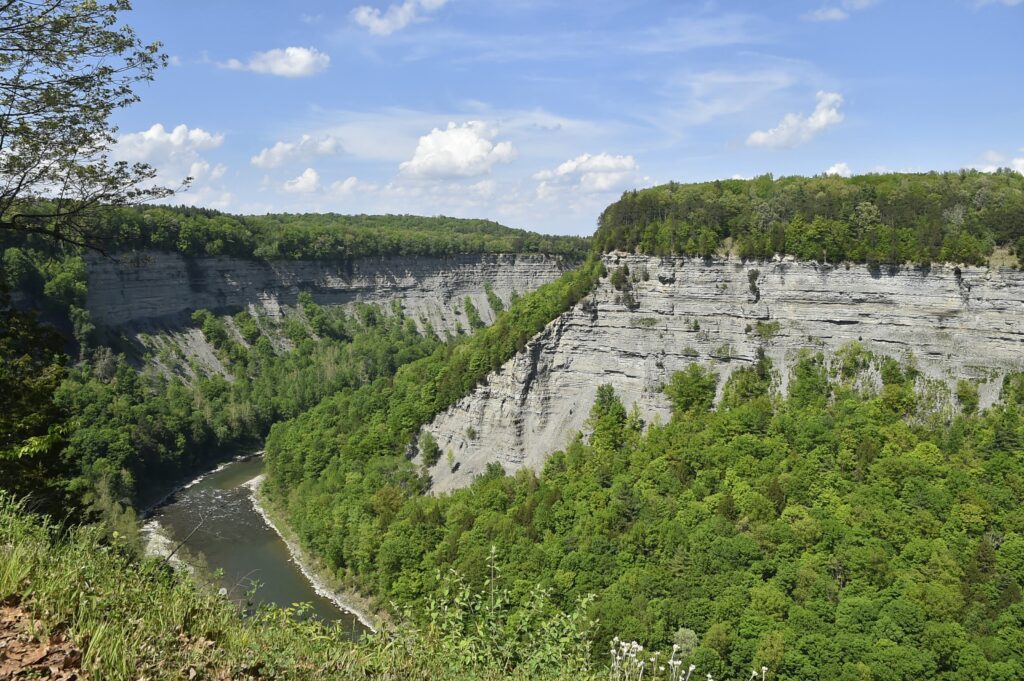
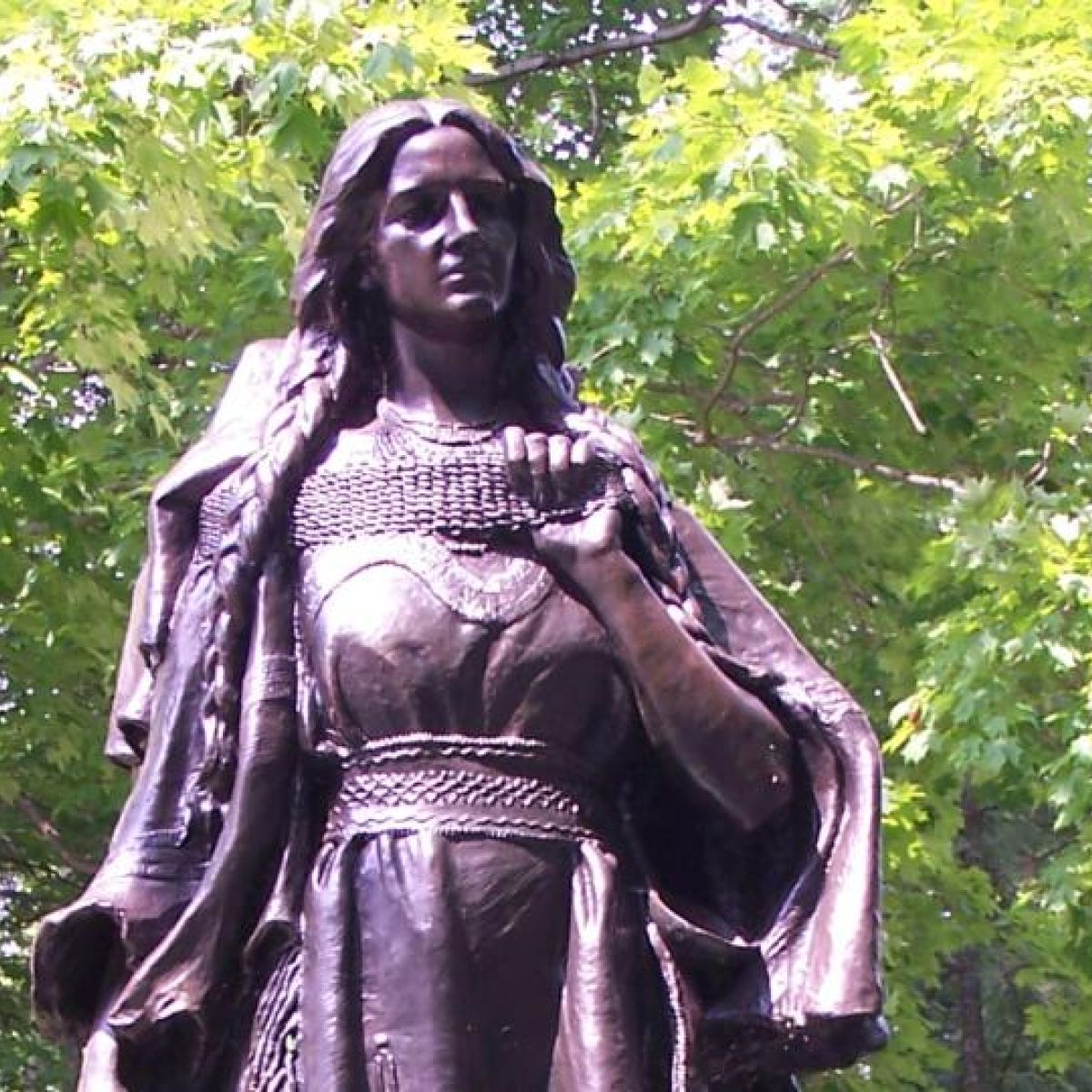
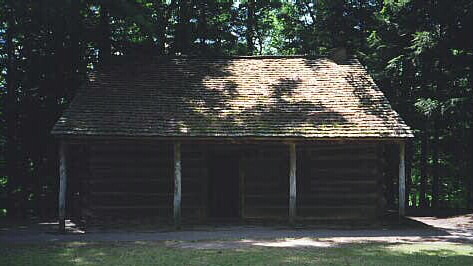
A number of books have been written about her – as well as her own account. Jemison’s story provided insights into the grave suffering of captives among the Native Americans and also into the lives of the Indians in general, and their women in particular. She is buried at Letchworth State Park on the grounds of a Seneca Council House, where a memorial to her is located and historical documents related to her life are kept. Mary Jemison’s remains were relocated there by William Pryor Letchworth (for whom the park is named) and rededicated in 1872.