

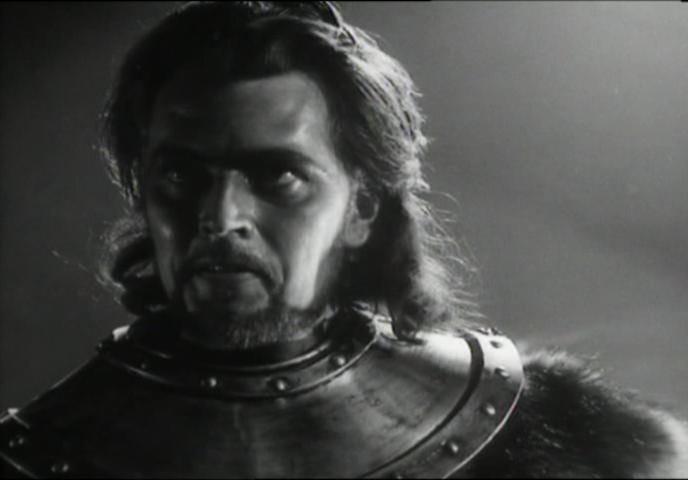
We’re descended – a long way back – from the Earls of Fife, of the clan MacDuff. The most famous MacDuff appeared in Shakespeare’s ‘Macbeth’ – though he may not have existed at all.
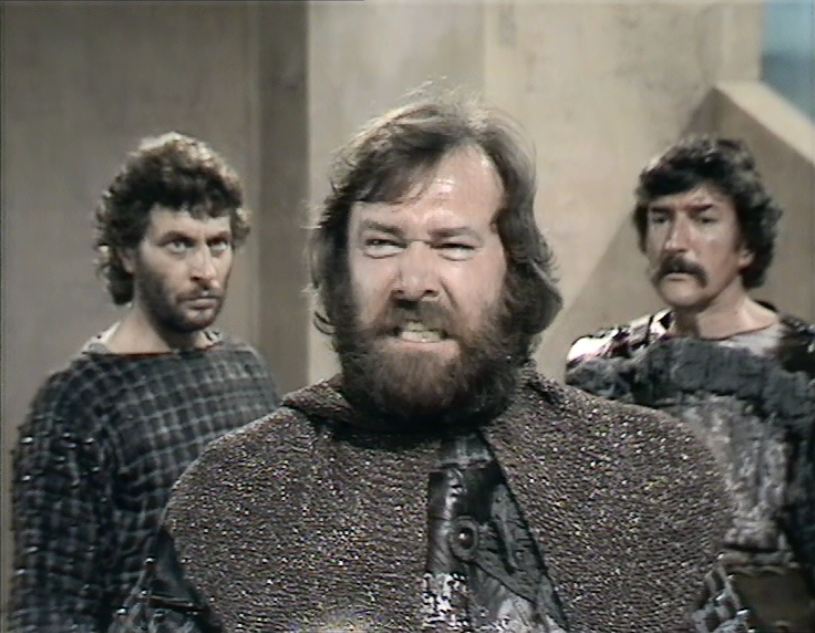
We’ve managed to trace back to Duncan, or in Gaelic, Donnchad MacDuff, the fourth Earl of Fife. He definitely existed, and is definitely our 26th Great Grandfather, through the Tartan/Irwin/Wymess line. Beyond that, it all gets a little hazy, but, according to legend, the Macduff in Shakespeare’s Macbeth was the first Earl of Fife, and would certainly be a relative or possibly our 28th Great Grandfather. You can trace it back from us to them in this document.
According to the Clan MacDuff webpage, the Duffs are descended from the original Gaels who inhabited the Highlands of Scotland long before the Roman Invasion, and before the Christian era. Their ancient Gaelic name, Dhuibh, is pronounced Duff, and signifies a dark complected man with dark hair. The first Scottish Highlanders were members of the ancient German Tribes who crossed over the German Ocean and settled first on the east and north coast of the barren Island of Caledonia, later moving inland. They were of the Chauci, Cimbri, Suevi, Catti, and others, all with fair complexions with either red or brown hair, and of a giant stature and enormous endurance.

The first official record of the Thanes of Fife was in the year 838 A.D. At that time Kenneth MacAlpine (Cináed mac Ailpin), who bore the blood of both Pictish and Scots-Irish Kings in his veins, had united two warring nations under one rule in the name of Scotland. When he appointed his Governors for the several Provinces, Fifus Duffus, or Duff of Fifeshire was appointed Governor of Fifeshire.
In 1039 Queen Gruoch – who was portrayed by Shakespeare as Lady Macbeth – and her second husband King Macbeth murdered King Duncan and took the Scottish throne. When MacDuff, the Thane of Fife, suspected what had been done and failed to aid in building Macbeth’s Castle, the pretender swore vengeance and drove MacDuff, into exile. MacDuff hurried to England to join forces with Malcolm, the young son of the murdered King Duncan, and persuaded him to return to Scotland and take back the throne of his fathers. (Keep up at the back, I know this reads like a soap opera).

Macbeth, meanwhile, had murdered Lady MacDuff and their children, and the furious MacDuff attacked Macbeth’s Castle at Dunsinane, drove him north into the Hills above the Dee River, where MacDuff took his revenge of Macbeth carried his severed head to Prince Malcolm.
The Prince duly became King Malcolm of Canmore and once he was firmly established on the throne, he called a Parliament at Forfair in 1057, and rewarded those who had aided him – including MacDuff. He was given three privileges:
That the Earl of Fife, by Office, shall bear the heraldic red lion rampant of the Royal House, and shall set the Crown upon the King’s head on the stone of Scone at his Coronation.
That when the King should give Battle to his enemies, that the same Earl should lead the Vanguard of his host.
That the lineage of Duff should enjoy Regal authority and Power within all their lands, as to appoint officers and judges for the hearing and determination of all manner of Controversies – “Treason onlie excepted” – and if any men or tenants were called to answer in any court other than their own circuit, they might appeal to their own judges.
According to Cliffs Notes on the play, MacDuff is the archetype of the avenging hero, not simply out for revenge but with a good and holy purpose. MacDuff is the character who has two of the most significant roles in the play: First, he is the discoverer of King Duncan’s body. Second, the news of the callous murder of his wife and children spurs him toward his desire to take personal revenge upon the MacBeth. As a supporting character, Macduff serves as a foil to Macbeth; his integrity directly contrasts with Macbeth’s moral perversion.
So did he exist? Probably not, or at least not in the role ascribed to him by Shakespeare. The surname as MacDuff is much associated with MacBeth although it seems that these stories are at best allegorical, as the surname MacDuff did not exist as such in the 11th century.
However, as Scotland’s most senior Earls, the Macduffs play a significant role in Scottish history: Gillemichael MacDuff witnessed the Charter of Holyrood granted by David the First, and Duncan, the Sixth Earl, was one of the nobles who treated for the ransom of King William in 1174.
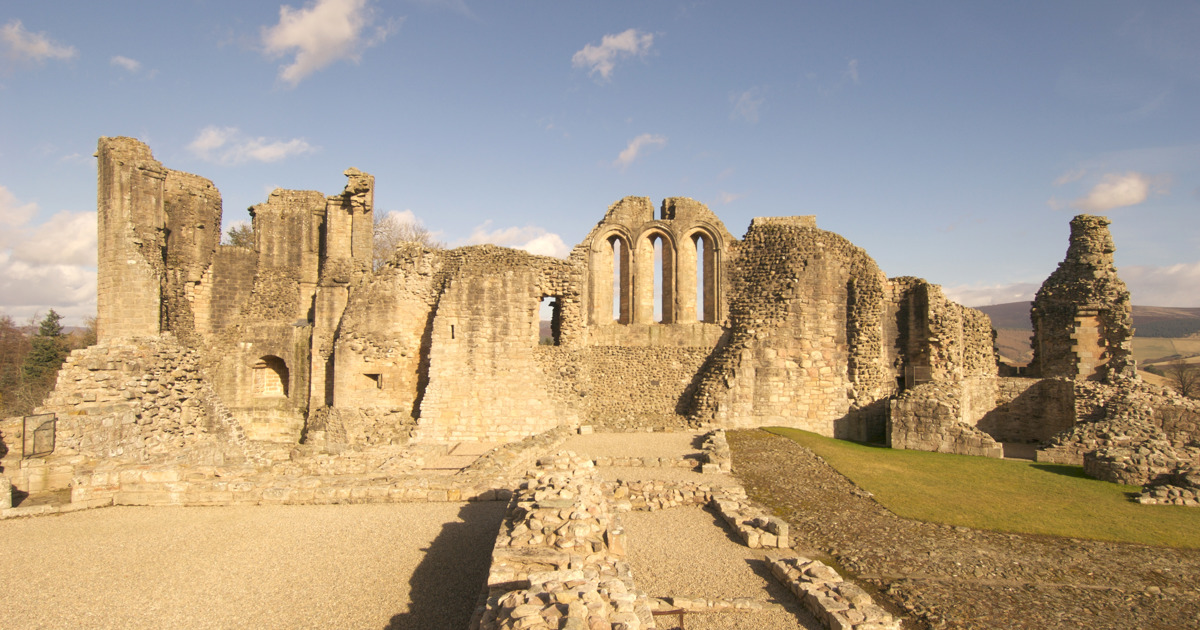
In the latter part of the thirteenth century Duncan, Earl of Fife, married the niece of Edward the First, King of England, so perhaps not surprisingly he took the side of his wife’s people and was on the opposite side against Robert The Bruce. After Bruce won the war for Independence and eventually the Earl of Fife and his wife fell into his hands, King Robert imprisoned them in Kildrummy Castle, Aberdeenshire, where they remained until the Earl’s death in 1336.
Our line with the Earls diverges at this point, following the birth of Isabella Margaret MacDuff. Heiress of Holkettle, daughter of the 10th Earl, who married Sir Robert Stewart of Innermeath.