

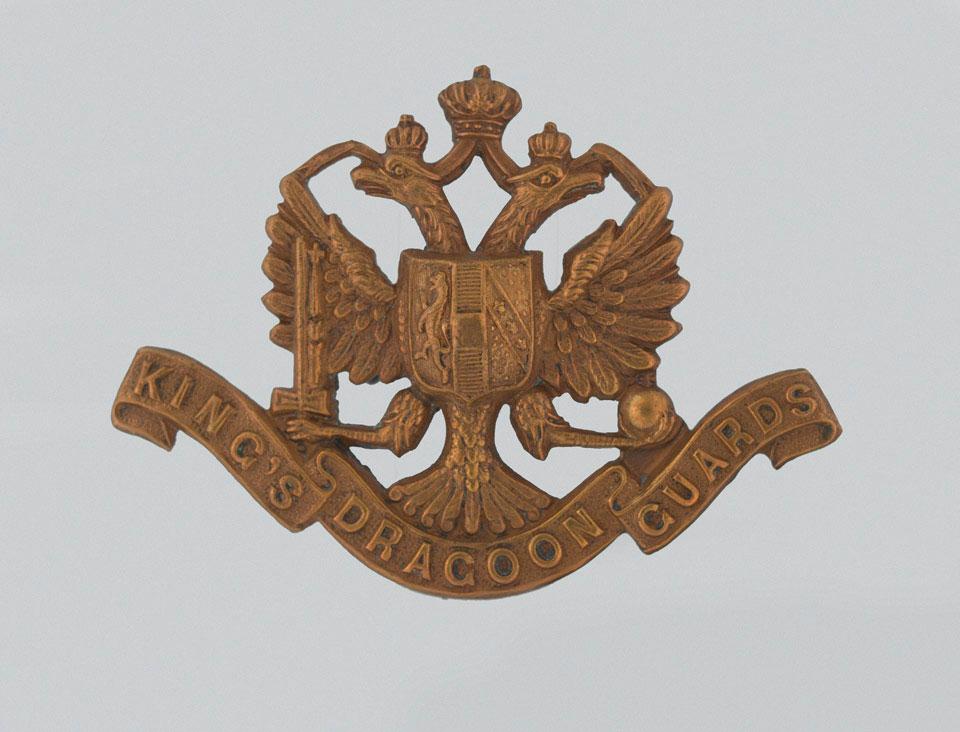
Fifth great grandfather Thomas Bails served in the army for nearly 20 years
Thomas Bails was born in Garrigil in Cumberland in 1759, at a time when most villagers were involved in the lead-mining industry. But that was not the path that Thomas chose for himself. At the age of 18, he joined the 1st King’s Dragoon Guards, a cavalry regiment in the British Army. The regiment was raised by Sir John Lanier in 1685 as the 2nd Queen’s Regiment of Horse, named in honour of Queen Mary, consort of King James II. It was renamed the 2nd King’s Own Regiment of Horse in 1714 in honour of George I. In the reign of George II, a Royal Warrant of 19 December 1746 changed the Regiment’s name to First, or King’s, Regiment of Dragoon Guards.
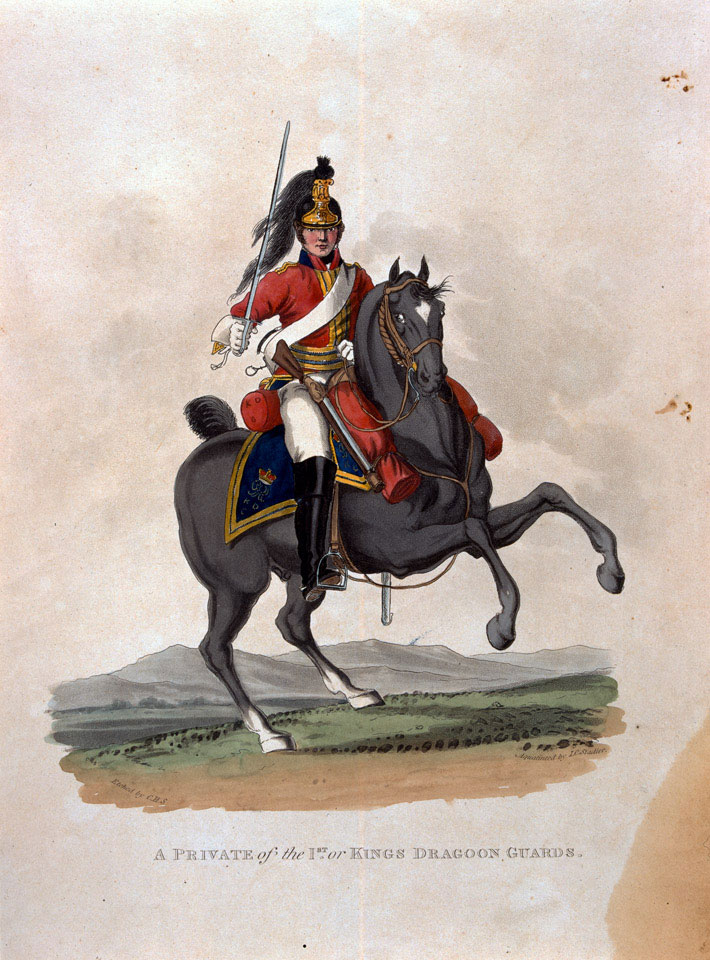
When Thomas joined the regiment in 1777, it was based in Britain and didn’t deploy overseas until 1793 when it went to Flanders during the French Revolutionary Wars (1793-1802), fighting at Catillon, Beaumont and Tournay in 1794. The French Revolutionary Wars were a series of sweeping military conflicts lasting from 1792 until 1802 and resulting from the French Revolution. They pitted France against Great Britain, Holy Roman Empire, Prussia, Russia, and several other monarchies.
Dragoons were originally mounted soldiers primarily intended to fight on foot. They were named after their main weapon, ‘the dragon’, which was a type of firelock musket common in the 16th century.
In the early years, dragoon horses tended to be cheap beasts of burden rather than fine cavalry chargers. However, by the late 18th century most dragoon regiments had evolved into conventional cavalry, able to charge and fight on horseback.
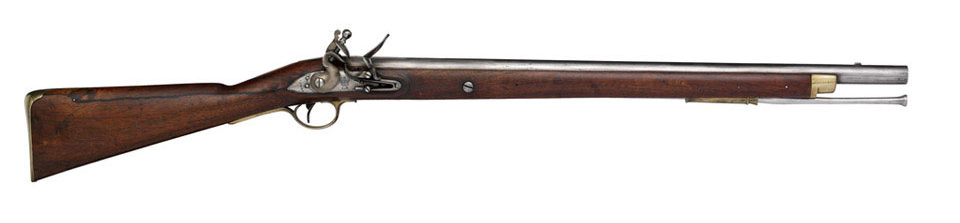
They were armed with short rifles known as carbines and heavy swords. The British Army had light dragoons, used for scouting and reconnaissance duties, and dragoon guards, who fulfilled a heavy cavalry role by delivering shock action on the battlefield.
According to Thomas’s release papers, he was a trumpeter. Being a trumpeter was not a purely ceremonial role. Commanders relied on musicians to communicate orders to their troops during combat so they always had a prominent role on the field of battle.
Thomas was discharged on the 12th July 1797 at the age of 39.
And that’s where we lose track of Thomas. It’s likely he went back to live with his wife Sarah in Cumberland, as the family home still seems to have been there. Sarah’s life had not been easy – by the time Thomas was discharged they had lost three children; Thomas junior died aged 5 in 1787; his younger brother Matthew died at the same age in 1789; and Mary died that same year at just one year old.