

25th Great Grandfather
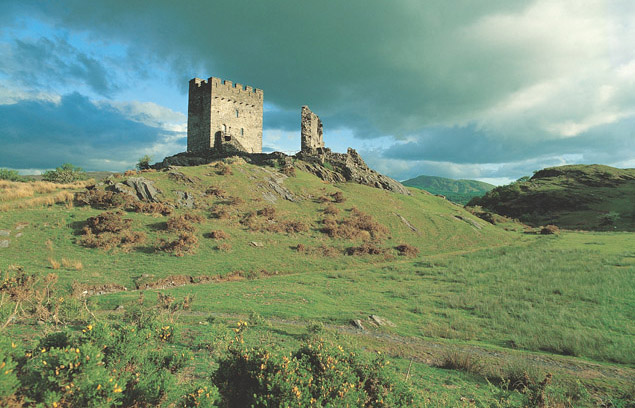
The link to Llywelyn ap Iowerth, the King of Wales, comes through the Trathan/Irwin line of the family. Llywelyn was born in 1173 at Dolwyddelan in Gwynedd, a member of the princely house of Gwynedd and grandson of Owain Gwynedd, the first ‘Prince of Wales’.
By 1175, after Owain’s death, Gwynedd had been divided between two of Llywelyn’s uncles. Dafydd ab Owain held the area east of the River Conwy while Rhodri ab Owain held the west. Because they were sons of Owain’s second marriage, which was not recognised by the church, Llywelyn was seen as the true heir to Owain’s throne – at least in the eyes of the church.
By 1188 – when Llywelyn was just 15 – he had already taken up arms against his two half-uncles. In 1194, with the aid of two cousins, Gruffudd and Maredudd ap Cynan, he defeated Dafydd at the Battle of Aberconwy. Rhodri died in 1195, and his lands west of the Conwy were taken over by Gruffudd and Maredudd while Llywelyn ruled the territories taken from Dafydd east of the Conwy.
In 1201, he took Eifionydd and Llŷn from Maredudd ap Cynan on a charge of treachery. In July, the same year Llywelyn concluded a treaty with King John of England. This is the earliest surviving written agreement between an English king and a Welsh ruler, and under its terms Llywelyn was to swear fealty and do homage to the king. In return, it confirmed Llywelyn’s possession of his conquests and allowed cases relating to lands claimed by Llywelyn to be heard under Welsh law.
Llywelyn made his first move beyond the borders of Gwynedd in August 1202 when he raised a force to attack Gwenwynwyn ab Owain of Powys, who was now his main rival in Wales. Llywelyn consolidated his position in 1205 by marrying Joan, the natural daughter of King John. In the summer of 1209 he accompanied John on a campaign against King William I of Scotland.
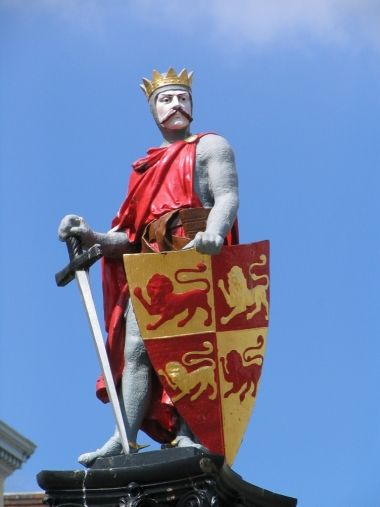
The relationship with John soured, however, as Llywelyn’s power and control grew across Wales. After John’s death, Llywelyn concluded the Treaty of Worcester with his successor Henry III in 1218. This treaty confirmed him in possession of all his recent conquests. From then until his death Llywelyn was the dominant force in Wales. Until 1230, Llywelyn had used the title princeps Norwalliæ ‘Prince of North Wales’, but from that year he changed his title to ‘Prince of North Wales and Lord of Snowdonia’, possibly to underline his supremacy over the other Welsh princes
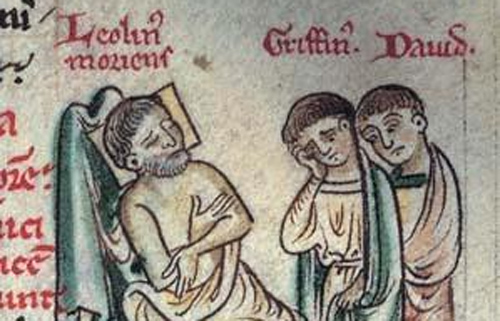
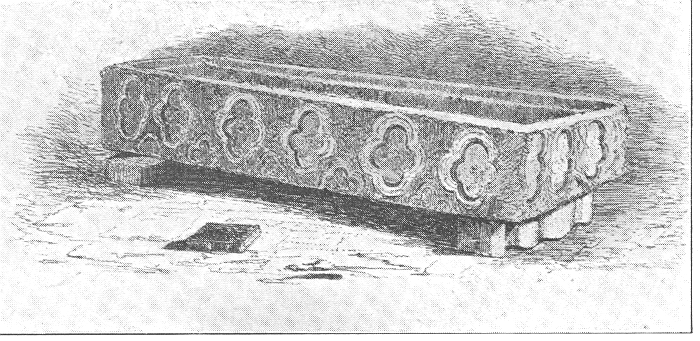
Joan died in 1237 and Llywelyn appears to have suffered a paralytic stroke the same year. Llywelyn died in April 1240 at the Cistercian abbey of Aberconwy, which he had founded, and was buried there.
Welsh poet Einion Wan wrote of him:
True lord of the land – how strange that today
He rules not o’er Gwynedd;
Lord of nought but the piled up stones of his tomb,
Of the seven-foot grave in which he lies.
Einion Wan
Llywelyn dominated Wales for more than 40 years, and was one of only two Welsh rulers to be called “the Great”. Historians today look back at a mixed legacy; some say his patriotic statesmanship would always entitle him to wear the proud style of Llywelyn the Great – but others said although he had dominated Wales, exacted unprecedented submissions and raised the status of the prince of Gwynedd to new heights, his three major ambitions – a permanent hegemony, its recognition by the king, and its inheritance in its entirety by his heir – remained unfulfilled.
One of the most long-lived legends around Llywelyn the Great is almost certainly not true – the story of Gelert, the faithful hound, said to be buried in the village of Beddgelert (‘the grave of Gelert’ in Welsh). In the legend, Llywelyn returns from hunting to find his baby missing, the cradle overturned, and Gelert with a blood-smeared mouth. Believing the dog had savaged the child, Llywelyn draws his sword and kills Gelert. After the dog’s dying yelp Llywelyn hears the cries of the baby, unharmed under the cradle, along with a dead wolf which had attacked the child and been killed by Gelert. Llywelyn is overcome with remorse and buries the dog with great ceremony, but can still hear its dying yelp. After that day Llywelyn never smiles again.
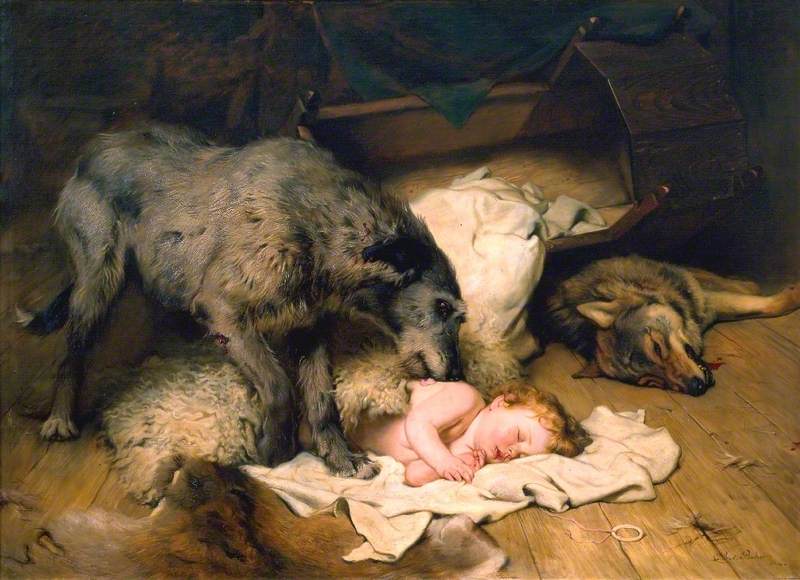
It is now accepted that the village of Beddgelert took its name from an early saint named Kilart or Celert, rather than from the dog. The “grave” mound is ascribed to David Prichard, landlord of the Goat Hotel in Beddgelert in the late eighteenth century, who connected the legend to the village to encourage tourism.