
Annette’s 10th great grandfather, Thomas Wilson
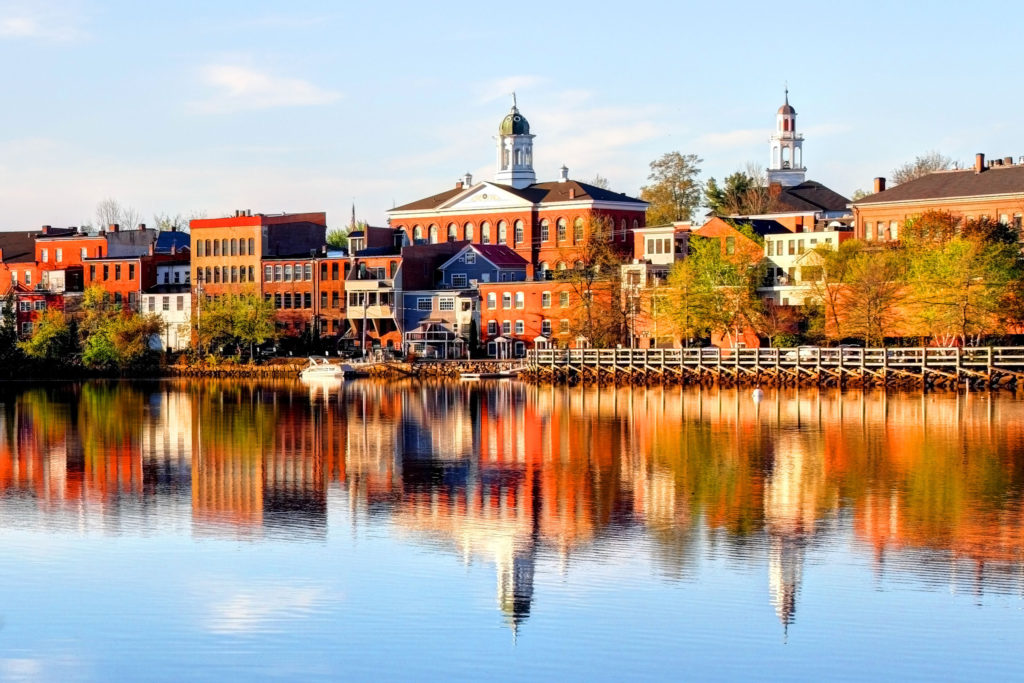
Thomas Wilson was born around 1600 in Leicestershire though in his mid-thirties he took the momentous decision of moving to America where he was one of the founding fathers of the town of Exeter, New Hampshire.
Thomas moved to America in June 1633, with his wife, Ann, and three sons: Humphrey, Samuel, and Joshua. He seems to have left his daughter, Ann, who was aged 11 at the time, back in England (where she became Annette’s ninth great grandmother). One can only assume that he wanted to protect a young girl from the privations of frontier life.

Thomas, however, also had children born in America: Deborah in August 1634, and Lydia in November 1636.
The area was once the domain of the Squamscott people, a sub-tribe of the Pennacook nation, which fished at the falls where the Exeter River becomes the tidal Squamscott, the site around which the future town of Exeter would grow. On April 3, 1638, the Reverend John Wheelwright and others purchased the land from Wehanownowit, the sagamore, or paramount chief of the tribe.
John Wheelwright was a puritan clergyman who was banished from the Massachusetts Bay Colony because of his connections with dissidents within the community who criticised the colony’s ministers, accusing them of preaching a covenant of works as opposed to the covenant of grace espoused by Reverend John Cotton, another Puritan minister. (Jncidentally who is the father of Increase Mather and grandfather of Cotton Mather, best remembered for their involvement in the Salem Witch Trials of 1695.) Wilson was excommunicated from the church.
Thomas Wilson was one of the 175 people who came with Wheelwright to Exeter, and one of the signatories of the Exeter Combination, a document written by Reverend Wheelwright to establish their own government.
The government consisted of three elders, the chief of them called “ruler”, who had judicial and executive functions. The whole body of freemen chose the elders and served as a legislative body, with their enactments subject to the approval of the ruler. The government thus set up endured for five years. It never had recognized jurisdiction over the whole of the area covered in the Indian Deed, but it did control the area of the present-day towns of Exeter, Newmarket, Newfields, Brentwood, Epping and Fremont.
We know little about how the town looked but can assume that some of the settlers built substantial houses because there were two carpenters among the first settlers, and because we know that at least two of their houses were in use many years later. Most of the first settlers, including Wheelwright, lived on the west side of the river, but a few lived on the east side. The settlers raised cattle and swine; they made barrel staves and shakes entirely with had tools; they did some planting; and they exploited the abundant fish in the rivers.
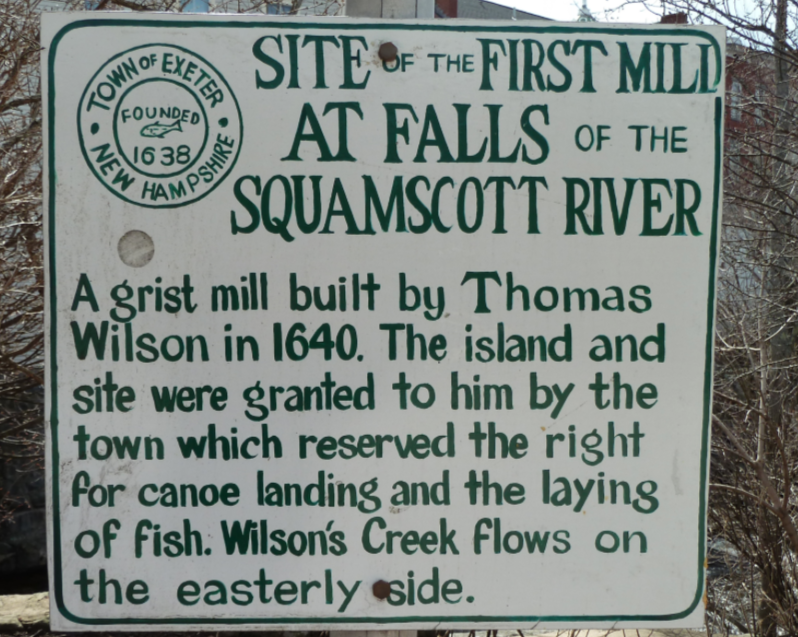
Although he had been in sympathy with Wheelwright, and came with him to Exeter to reside, Thomas subsequently made peace with the church which he had left. He was a signer of the Combination and occupied the island at the falls and some lands on the eastern side of the river. In the first division of lands he received four acres and twenty eight rods of marsh.
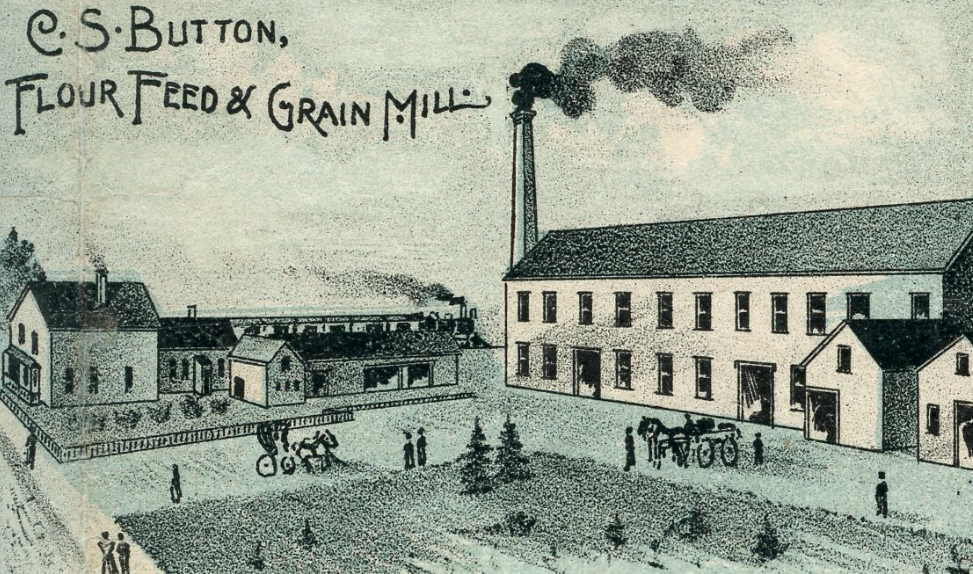
Wilson built the first grist mill in the town on the eastern side of the island in the lower falls. This mill was established within the first season of settling in Exeter, and his son Humphrey assumed control of the mill in 1643, when Thomas died. On the twentieth of October, 1642, on the resignation of Nicholas Needham as Ruler, Thomas was elected his successor.
Thomas left a will in which he made provision for his widow and children:
In the name of God Amen. I Thomas Wilson of Exeter being very sick, yet in my right witts.My loving wife & deare children I commend vnto the grace of God & to the oversight & watchfull eye of my christian brethern of the church of Roxbury, Hampton & Exeter, or where it shall please God to call them.To wife my dwelling house & new fram wth the mill, & all lands & moveables thereunto belonging, during her widowhood:& the vse of all my cattle & moovable goods for the bringing vp of my children.If she marry again, then to haue her thirds, & to leaue them to my son Humfrey.To son Samuel & son Joshua, to my daughter Deborah & my dau. Liddey, either of them ten pounds at the age of 21, or day of marriage, out of the mill goods. To som Humphrey my right & interest in house & land wh I bought of Mr. Needam.And if wife die before my four younger children come to age, or any of them, then son Humphrey to provide for their nurture & bringing vp out of his owne dowry.To sons Samuel & Joshua, 4000 pipe staues, to buy either of them a bullock.
This 9 day of the 11 mo 1642.
Witnesses, Edward Hilton, John Smart, John Legat, John Richardson.
deposed in court the 20 of the 7, 1643.Increase Nowell]
From Thomas Wilson’s Will
Thomas’ widow was married the next year to John Legat. A difference arose about the estate between her and her oldest son Humphrey, which was by the General Court referred to the County Court at Ipswich.