
Grandfather Percy Beard’s World War I experience
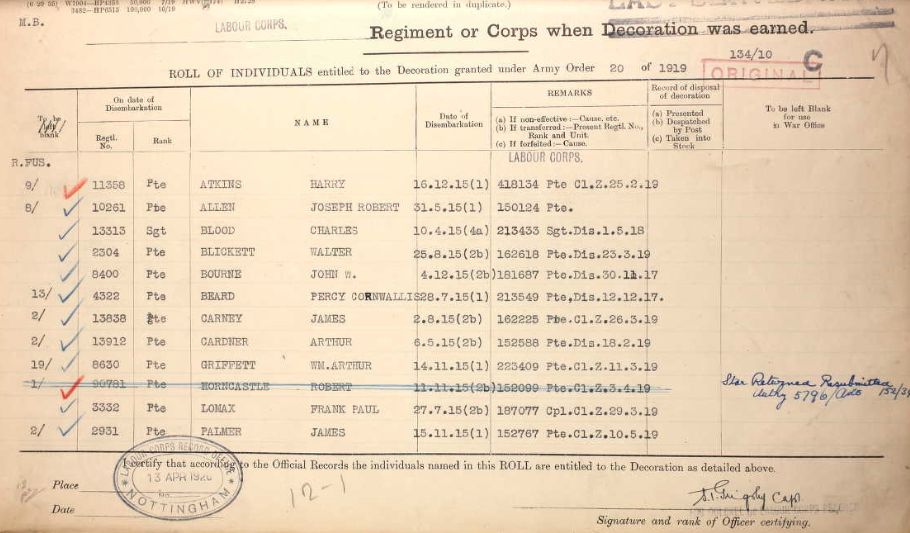
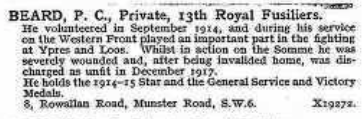
Percy Beard was already in his mid-30s when the First World War broke out at the end of July 1914. He signed up as a volunteer in Hounslow within a few weeks in September 1914 as a private in the 13th Royal Fusiliers.
The 13th (Service) Battalion formed at Hounslow on 13 September 1914 as part of K3 and attached as Army Troops to 24th Division. Also known as the City of London Regiment, the Royal Fusiliers raised no fewer than 47 battalions for service in the Great War. This makes it the fifth largest after the London Regiment, Northumberland Fusiliers, Middlesex Regiment and King’s (Liverpool Regiment). The 13th Battalion was attached as Army Troops to 24th Division. In March 1915 they came under command of 111th Brigade in 37th Division. They landed at Boulogne on 30 July 1915.
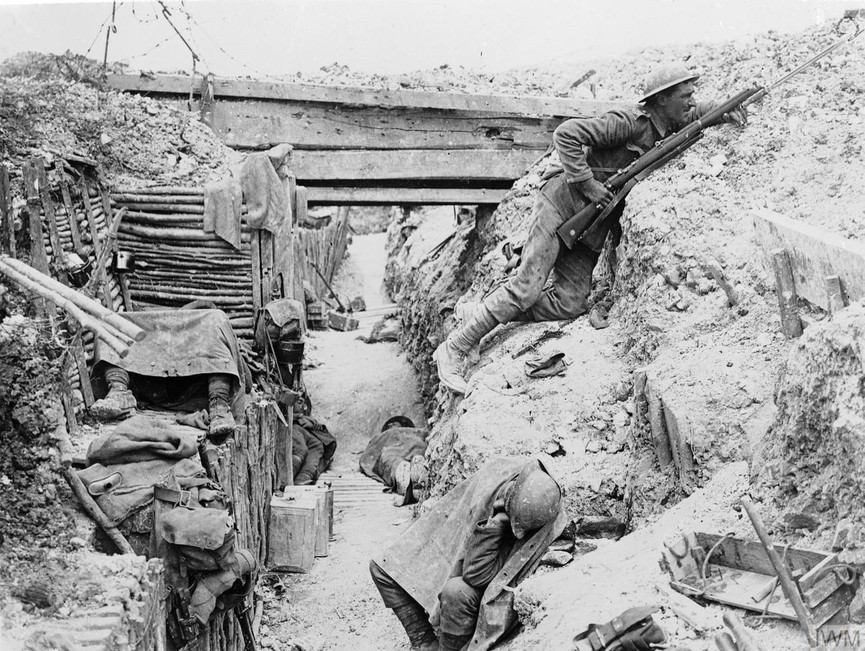
Percy served at Ypres and Loos. Ypres occupied a strategic position during the First World War because it stood in the path of Germany’s planned sweep across the rest of Belgium and into France from the north. The neutrality of Belgium was guaranteed by Britain; Germany’s invasion of Belgium brought the British Empire into the war. The German army surrounded the city on three sides, bombarding it throughout much of the war. To counterattack, British, French, and allied forces made costly advances into the German lines on the surrounding hills. The first and second battles of Ypres took place before Percy’s battalion arrived.
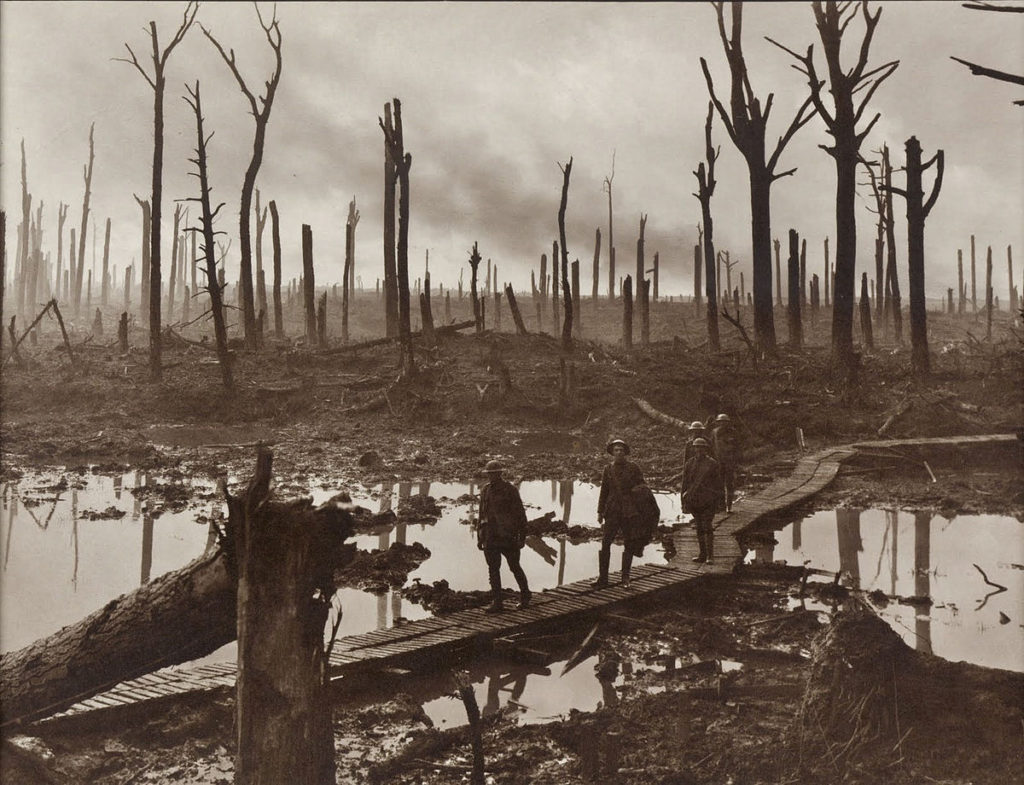
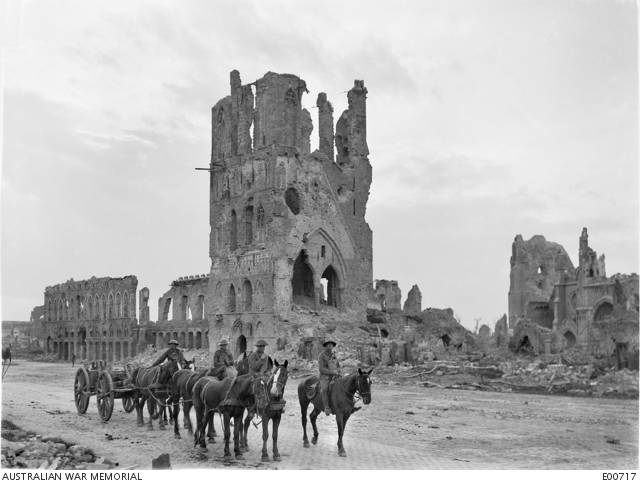
His battalion was, however, a participant in the largest, best-known – and most costly in human suffering – third Battle of Ypres (31 July to 6 November 1917, also known as the Battle of Passchendaele, in which the British, Canadian, ANZAC and French forces recaptured the Passchendaele ridge east of the city at a terrible cost of lives. After months of fighting, this battle resulted in nearly half a million casualties to all sides, and only a few miles of ground won by Allied forces. During the course of the war the town of Ypres was all but obliterated by the artillery fire.
The Battle of Loos took place while the third battle of Ypres was still going on, between 25 September and 8 October. It was the biggest British attack of 1915, the first time that the British used poison gas. The French and British tried to break through the German defences in Artois and Champagne and restore a war of movement. Despite improved methods, more ammunition and better equipment, the Franco-British attacks were largely contained by the Germans, except for local losses of ground. The British gas attack failed to neutralize the defenders and the artillery bombardment was too short to destroy the barbed wire or machine gun nests. German tactical defensive proficiency was still dramatically superior to the British offensive planning and doctrine, resulting in a British defeat.
Percy went on for his final engagement of the war at the battle of the Somme. It took place between 1 July and 18 November 1916 on both sides of the upper reaches of the River Somme in France. The battle was intended to hasten a victory for the Allies. More than three million men fought in the battle and one million men were wounded or killed, making it one of the deadliest battles n human history.
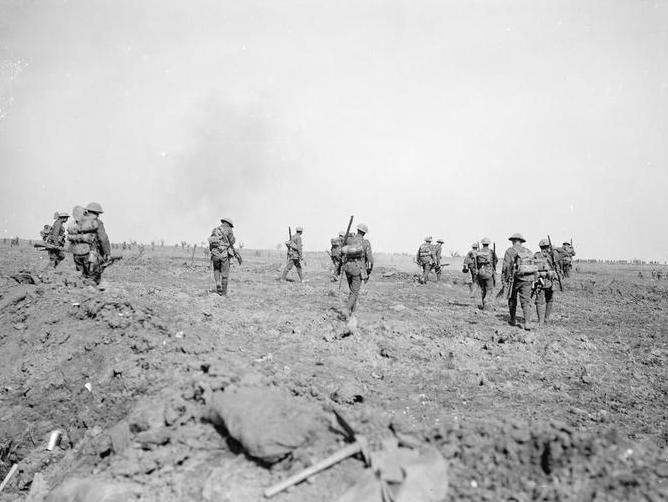
The 57,470 casualties suffered by the British, including 19,240 killed, were the worst in the history of the British Army. The battle became notable for the importance of air power and the first use of the tank in September but these were a product of new technology and exceedingly unreliable.
Percy was one of those casualties. He was badly wounded during fighting at the Somme having been shot in the neck and through his calf muscle. He was invalided home and discharged from service being medically unfit in 1917. A lot of the details of Percy’s war record were collated by my cousin Gill, from her father (Eric) and our shared grandparents (Rose & Percy).