

Great great grandfather Matthew Lee
Matthew Lee worked as a farm labourer on his uncle John Lee’s farm, then had his own farm (albeit a smaller one) but then was the first of the family line to go down the Ironstone mines of North Skelton, in Yorkshire.
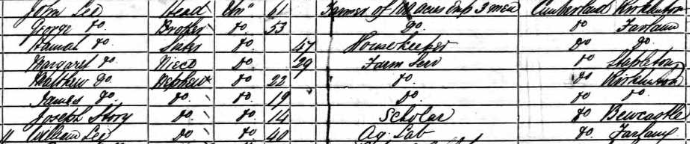
Uncle John is actually, as far as we can tell, actually Matthew’s Great Uncle John, the elder brother of his grandfather, Thomas Lee. In the 1841 census he is listed as an agricultural labourer but by 1861, he was doing rather well for himself, where he is listed as farming 100 acres, and employing three men – including his great-nephew Matthew.
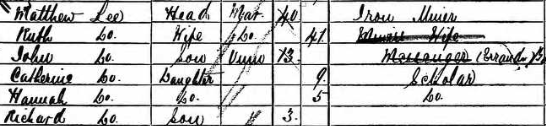
Ten years later, Matthew has followed in his uncle’s footsteps, and was farming 43 acres at Caldbeck High in Cumberland – and, according to his entry, he was also a Methodist lay preacher.

Caldbeck High would have been a very traditional Cumberland community in the nineteenth century. It would not have been wealthy and conditions – particularly in the winter – would have been harsh.
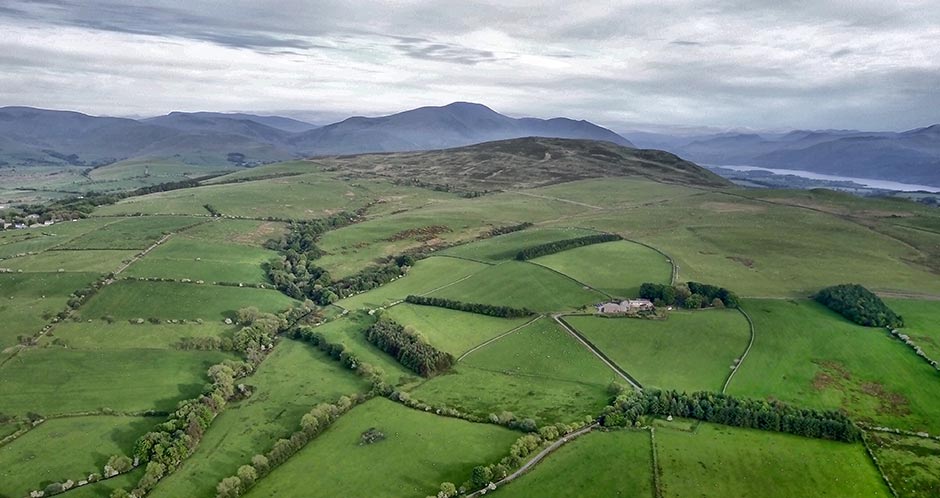
Caldbeck is a traditional fell village situated in the Northern Fells of the English Lake District or the “Back O’ Skidda” as the locals call it. It’s almost equidistant from Cockermouth, Keswick, Penrith and Carlisle and one of the more remote and lesser known parts of the Lake District, but boasts some outstanding scenery and some of the best, less frequented walking in the whole of the Lake District. The 12th century St Kentigern’s Church is the resting place of the famous local huntsman, John Peel. “Do ye ken John Peel”.
Today, the farms are relatively small, mostly upland and mixed. Now they are, of course, much less labour intensive than they were in the past, but farming families are still the backbone of the area, providing continuity from generation to generation.
In a book, “One Hundred Years of Hill Farming” by G.H. Cole, the life of a hill farmer in those days is well described.
“It turned out that we started at 5.00 a.m.” That was the old routine, cleaning out the stables, feeding the horses, mucking out the byre, seeing the cows were foddered and caked, then milked and then feeding the calves. “This was all expected to be done by 7.30 a.m prompt, when we all went into the house for breakfast.” This was the pattern of life for the young S.H.Cole, Geoff Cole’s father, almost a hundred years ago when he started work on Christopher Hewetson’s 160 acre farm at Midtown, Caldbeck – “A thrang place with only three of us and the servant girl to get through it.”
One Hundred Years of Hill Farming by G H Cole (Scotforth Books)
But it was a hard life. And while we don’t know what happened, by the time of the next census in 1881, Matthew had left the farming life behind and he’d moved to North Skelton, near Guisborough in what is now North Yorkshire.
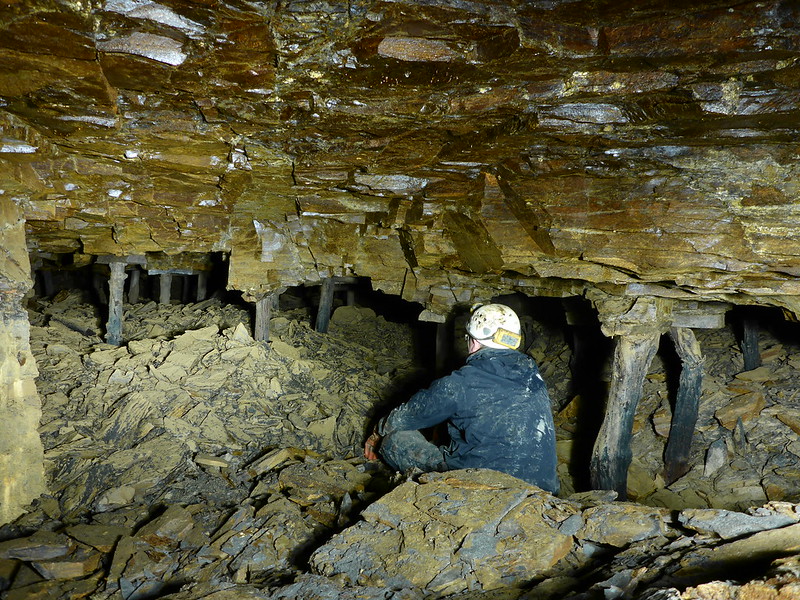
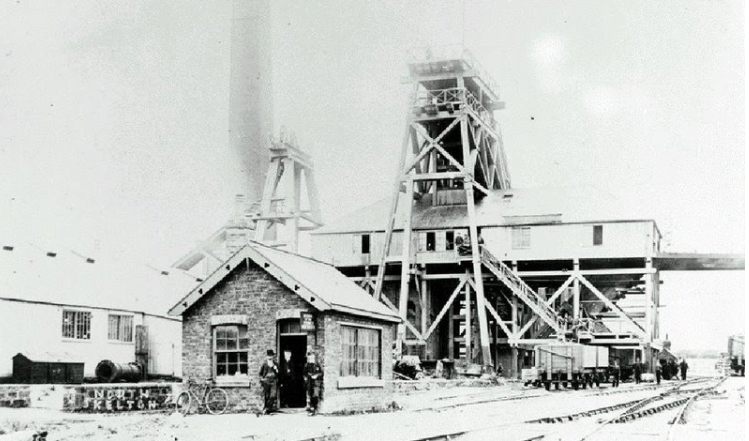
North Skelton had enjoyed a boom in the 1870s when the North Skelton ironstone mine was opened. The mine was the deepest of all of the Cleveland Ironstone workings and its shaft extended to over 220 m in depth. The mine produced over 25,000,000 tonnes of iron ore between its opening in 1872 and its eventual closure in January 1964. It was like a ‘gold-rush’ – one new mining settlement was even named California. Thousands of people came to find work in Cleveland in the ironstone mines and associated iron works – including coal miners from Durham, Northumberland and Scotland, tin miners from Cornwall, farm labourers from Norfolk, and migrants from Ireland. Cleveland produced one third of the total UK iron output during Victorian & Edwardian times. North Skelton was the last of the regions ironstone mines to close.
Another family historian, Carol Hagland, found that her ancestors had also been ironstone miners in the Teeside area in the late nineteenth century.
At the Family Tree website she writes “Ironstone mining was gruelling, dangerous work. The men who did it worked long hours underground, and it was hard, physical work, blasting the rock from the earth, then breaking up the stone with sledgehammers and wedges, to be carried in wagons up to the surface. In the early days, the stone could be mined near the surface of the ground, but this was soon exhausted, and gradually tunnels or ‘drifts’ began to follow the ironstone seam underground. Miners dug into the rock in a very systematic way, producing a grid of tunnels as they went. Gradually the squares within the grid were also removed, and as they were, wooden pit props were put in place to support the roof.
After all the ironstone was removed, a large open area remained, where the stone had once been, with the ceiling supported at intervals by wooden pit props. In order to save money, these had to be reclaimed, so in due course, the miners had to go into the farthest reaches of this open area, and remove the props, so that they could be re-used. They would then gradually work their way back to the beginning of the mined area, removing props as they went. The unsupported roof, of course, often collapsed, and not necessarily in an orderly fashion, so it is easy to imagine how hazardous this procedure was! Many men died in these mines – around 375 in the 99 years that Eston mine was open.
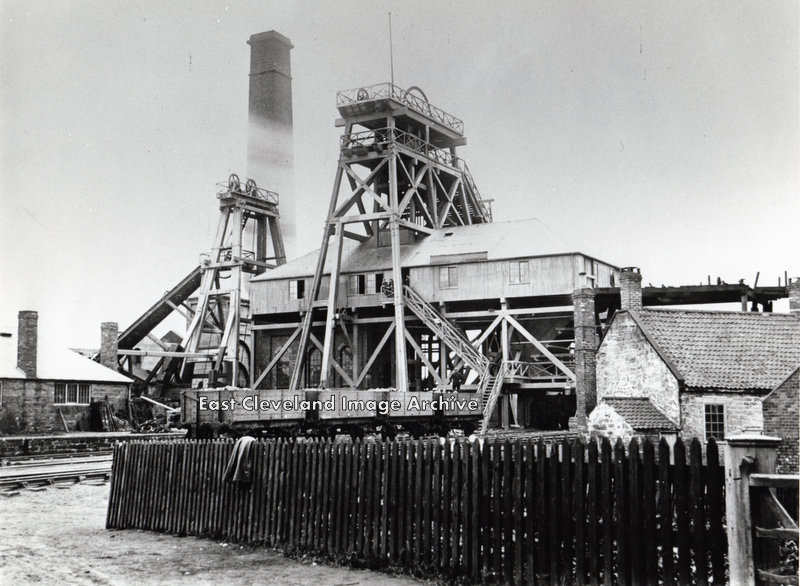
In these days of what some regard as excessive Health and Safety regulations, it is hard to imagine that people were allowed to work in such dangerous conditions. Not only were they at risk from rock falls, but also from the blasting that was often necessary to loosen the rock, so it could be broken up, and from the wagons that carried the ore out of the mine, which travelled rapidly along the narrow tunnels where the miners could be working. Once outside, these wagons travelled speedily down the hillside to the river, where the ore was transported to the blast furnaces. Several children were killed because they got in the way of these speeding wagons.
Miners began their careers young. Some as young as 11 or 12 in the early days. The lucky ones lived long enough to retire as old men, often having spent all their lives as miners, with thousands of hours underground.”
Matthew’s son John also became an ironstone miner, as did his son Allan – though he left the mines behind when he signed up to fight in the First World War, and never returned, instead joining the Metropolitan Police force in London