

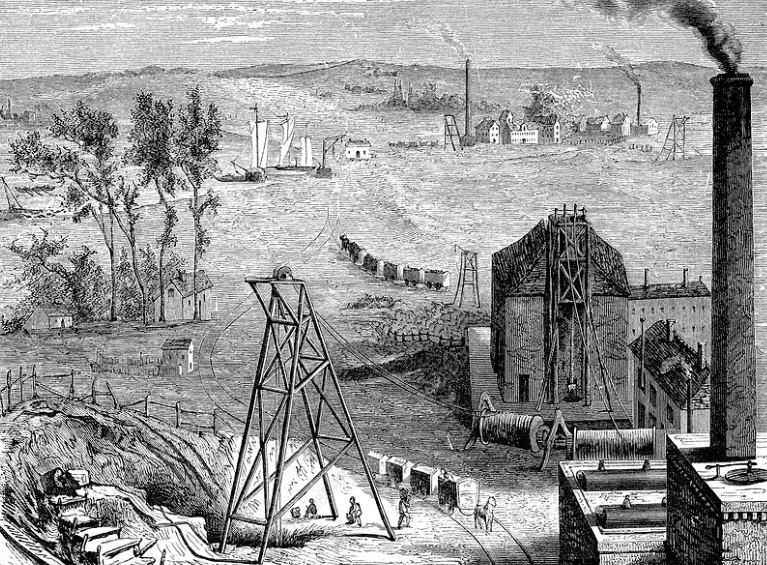
Annette’s 2nd Great Grandfather, John Clamp
When Britain’s coal industry was nationalised in 1947, there were 68 collieries in Derbyshire; now there are none. The last five pits to close were Renishaw Park (1989), Creswell (1991), Bolsover (1993), Markham (1993) & Shirebrook (1993).
Annette’s second Great Grandfather, John Clamp was actually the son of a Blacksmith (3rd Great Grandfather), also named John, who, according to the 1851 census, was the village blacksmith in Moira, a village about 3 miles south of Swadlincote and close to the boundary with Derbyshire.
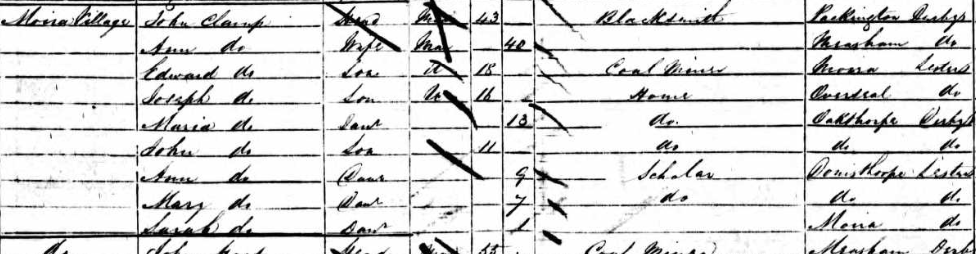
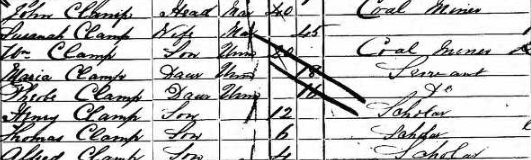
But it was his sons who became miners, as this later census entry records. By this stage, John was living in Linton Heath, just a couple of miles away from Moira.
From the 19th century on, coal became increasingly important because it was primarily used to power steam engines, heat buildings and later on, to generate electricity. Compared to wood fuels, coal yields a higher amount of energy per mass and can often be obtained in areas where wood is not readily available. Though it was used historically as a domestic fuel, coal became the number one source of energy for the industrial revolution. The small-scale techniques used up until then – usually in open pits – were unsuited to the increasing demand, with extraction moving away from surface extraction to deep shaft mining as the Industrial Revolution progressed.
The owners of coal mines needed a work force that would produce coal as cheaply as possible. A miner was paid according to how much coal he produced, not how many hours he worked. Some miners would take their whole families underground to try to get as much coal as possible, so they could earn more money. Each member of the family would be given a different job to do which would help the miner to get as much coal as possible. A system of fines could quickly reduce their pay, as could having to buy their own candles and stoppages for dust or gas. Many were paid in tokens which had to be spent in shops created by the mine owner, allowing them to recoup the wages in profits for overpriced food and other goods.

Work would start early, so the family would need to get up very early in the morning. Many families worked for up to 12 hours each day, and for 6 days a week. The only days off would be Sundays and holy-days like Christmas or Easter. Some mine owners might have given their workers a day off on the day of Queen Victoria’s Coronation.
Children who attended Sunday school might receive basic training on the alphabet, counting and bible stories, but this would be their only education.
Families walked to the pit-head, which could be several miles away. When they arrived at the mine, they might be lowered into the pit on the end of a rope in total darkness.
At the pit-bottom the workers had to walk to the coal face, which might be quite a distance. The underground roadways were usually narrow, uneven and low. There was no light, except for the miners’ candles.
Conditions were cramped. Some of the underground roadways were as little as 60 – 120 cm in height. Mine owners did not want to increase their costs by making them bigger. So small children were often used to pull or push tubs or large baskets of coal on sleds along the low and narrow roadways.
Some mines were very hot and wet, or hot and dusty. Dust was formed as stone and coal were worked by pick. Poor ventilation meant that the dust stayed in the air underground. In some mines, it was so hot that workers wore little or no clothing whilst they worked. It would feel even hotter if the ventilation was poor.
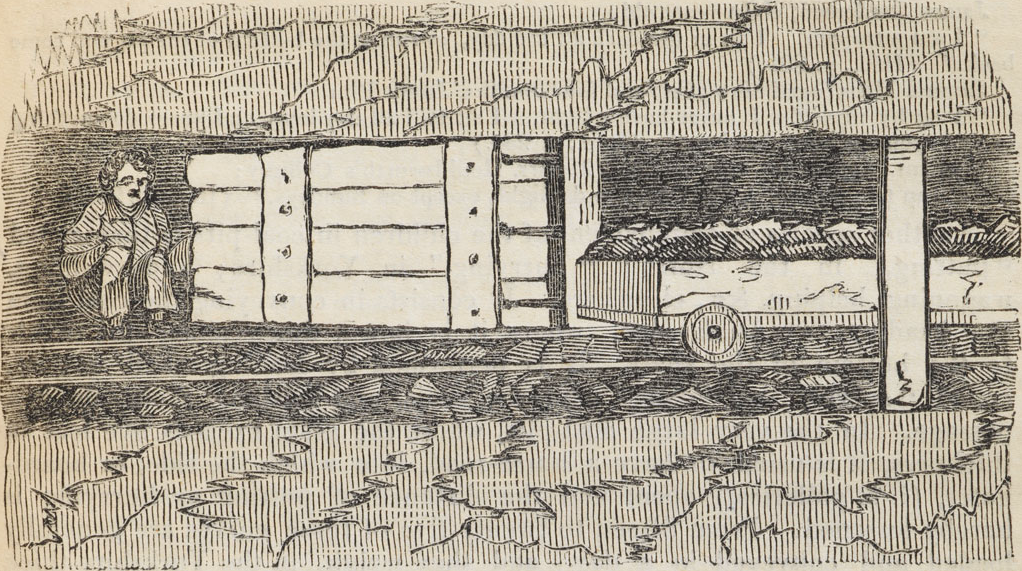
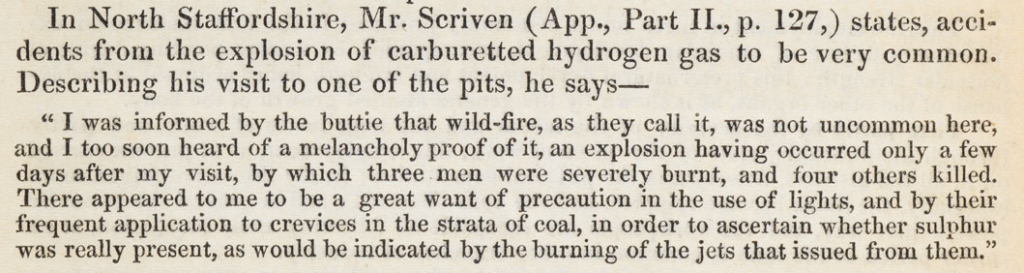
Water is always present in coal mines, as it seeps through the rocks above and gathers in underground reservoirs or old workings. Flooding was always a possibility and an ever present fear.The cramped conditions made accidents and injuries a common occurrence, with roof-falls one of the most likely causes of injury or death. Shaft accidents were also common, while mine gases could cause explosions or poison the workers.
This contemporary report talks of the dangers:
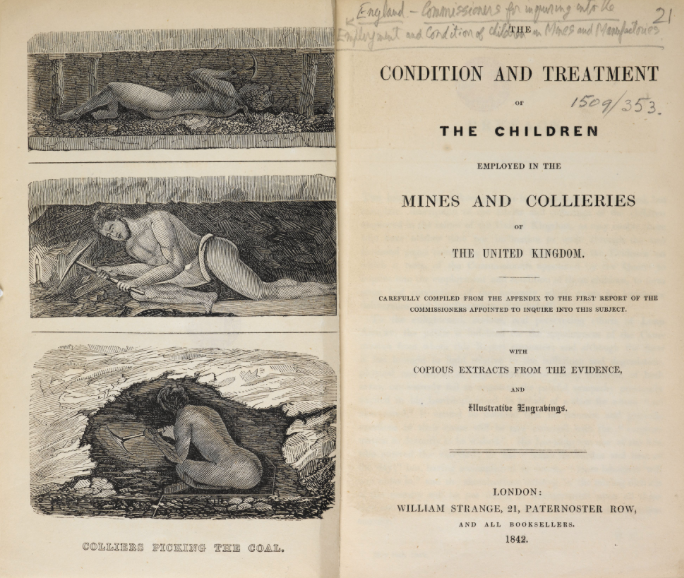
Britain had a long tradition of agricultural child labour, but with the development of coal mining, more children began entering the workforce at an earlier age. Children were on average five times cheaper to employ than adults, and were expected to work the same hours – which, in mining communities, could mean a 14-hour day.
In 1842 the government published the Report of the Children’s Employment Commission. It is one of the most important documents in British industrial history. Comprising thousands of pages of oral testimony (sometimes from children as young as five), the report’s findings shocked society and swiftly led to legislation to secure minimum safety standards in mines and factories, as well as general controls on the employment of children.
John Clamp was only 55 when he died – no doubt the hard life of a miner contributed to that.