

11th Great Grandfather Sir Timothy Featherstonhaugh
Sir Timothy Featherstonhaugh was born in 1601in Kirkoswald in what is now Cumbria, the son of Sir Henry, and was a major contributor to the Royalist cause during the English Civil War between 1642 and 1651. The war was between Parliamentarians (Roundheads) and Royalists (Cavaliers), mainly concerned with how the three kingdoms of England, Scotland, and Ireland were to be governed. Constitutionally, the wars established the precedent that an English monarch cannot govern without Parliament’s consent.
In 1620 he was admitted as a lawyer of Gray’s Inn. He was knighted at Whitehall on 1 April 1628. During the English Civil War he liberally contributed money to the royal cause, raised troops at his own expense, and served in the field. In 1642 he marched with Sir William Hudleston to King Charles at York.
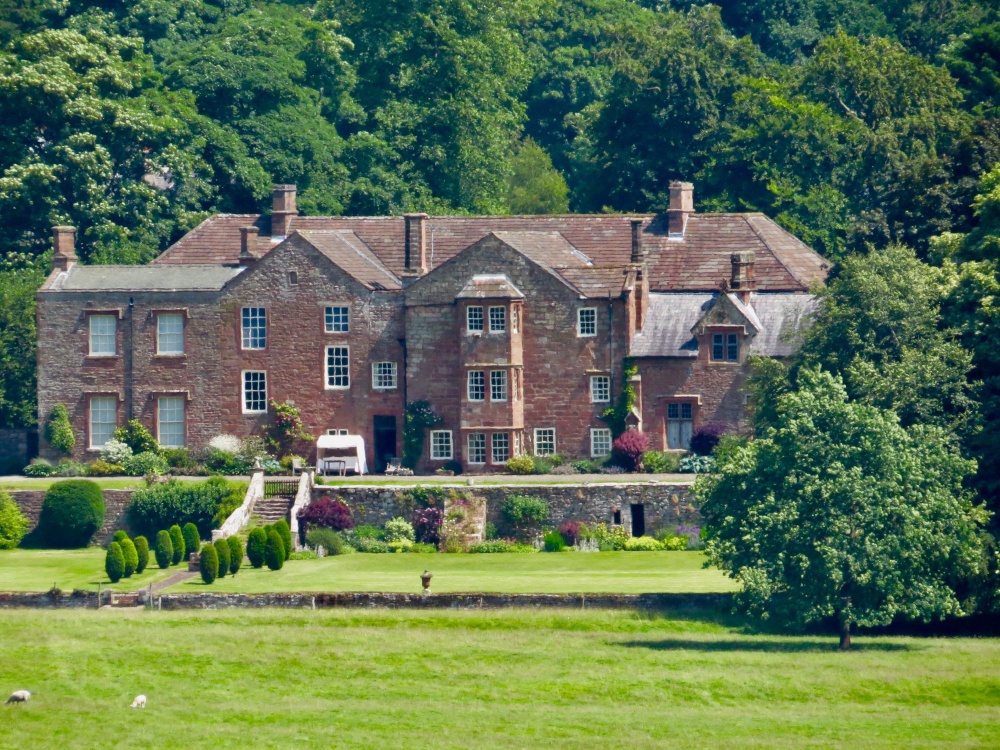
Sir Timothy and his wife Bridget lived in a house now knows as The College in Kirkoswald. Originally the Vicarage for Kirkoswald Church and converted to College of Vicars around 1523; the lands reverted to Crown in 1548 and let to various tenants until purchased by Henry Fetherstonhaugh in 1590.The home has remained in the same family ever since. It’s described by English Heritage as a late fifteenth century tower house, extended in 1523 for Thomas Lord Dacre (his coat of arms were over a now internal door and then repositioned as a panel of arms over a fireplace in the hall) with alterations made between 1633-1641 for Sir Timothy. The entrance has the initials TF and BF for Timothy & Bridget Fetherstonhaugh.
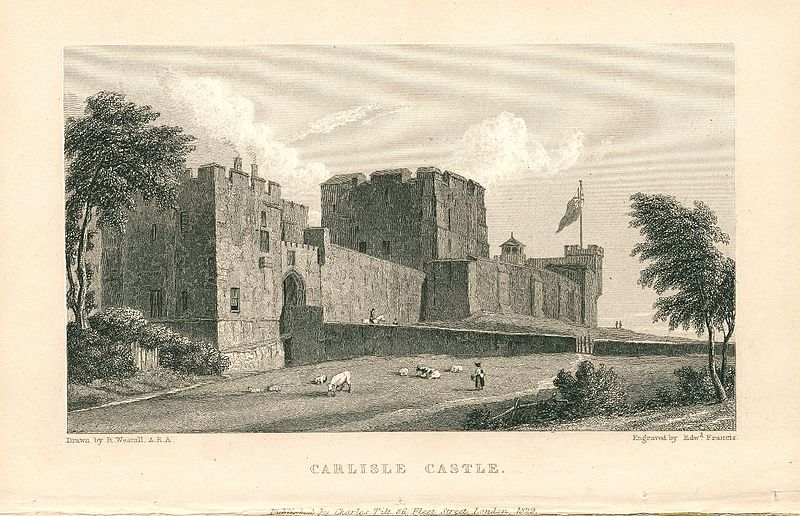
In February 1644 he left Oxford with introductions from the king and Lord Digby for Ireland, where he applied to James Butler, the first Duke of Ormonde and the leader of the Cavalier troops in Ireland, to send troops for the relief of Cumberland. The city of Carlisle had been placed under siege by the combined forces of the Scottish Covenanters and the Roundheads. His efforwere in vain, as in April 1645, the contraction of the siege perimeter around Carlisle slowly reduced the number of successful sallies the Royalists were able to conduct diminishing their food supplies. Starvation set in on the garrison causing the besieged Royalist to eat whatever they could including horses, dogs and rats. Finally in the summer of 1645, King Charles and his Royalist army lost another major battle at Naseby. Out of provisions with a diminished hope of relief, the Royalist garrison at Carlisle Castle surrendered on 25 June 1645.
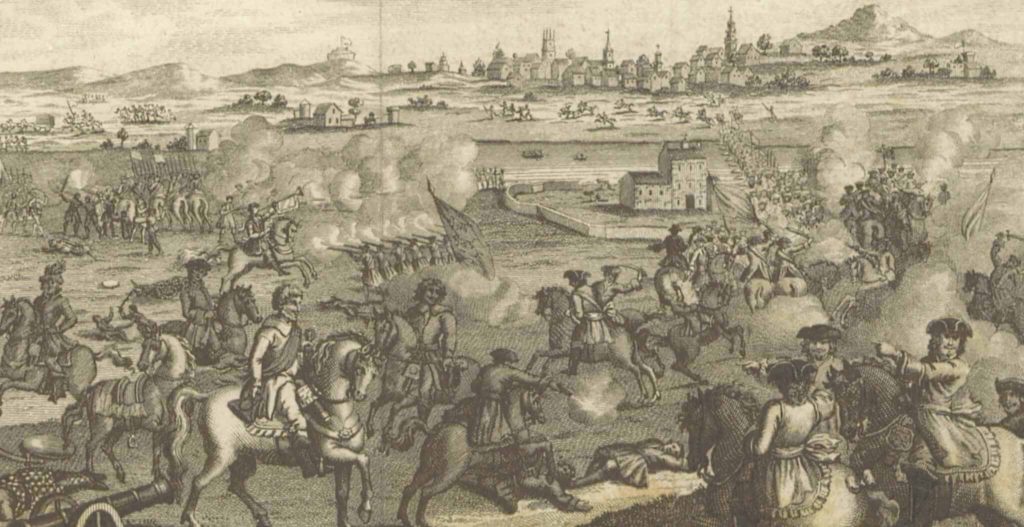
By December 1645, things had gone from bad to worse for the Cavaliers, as they held only Devon, Cornwall, North Wales, and isolated garrisons in Exeter, Oxford, Newark, and Scarborough Castle.
By January 1649, King Charles I was found guilty of high treason as a “tyrant, traitor, murderer and public enemy” and he was beheaded on a scaffold erected at the Place of Whitehall on 30 January 1649. The Scots Covenanters then proclaimed his son, Charles II, King and he was crowned at Scone in Scotland. They agreed to restore him to the throne of England which led to the third Civil War.
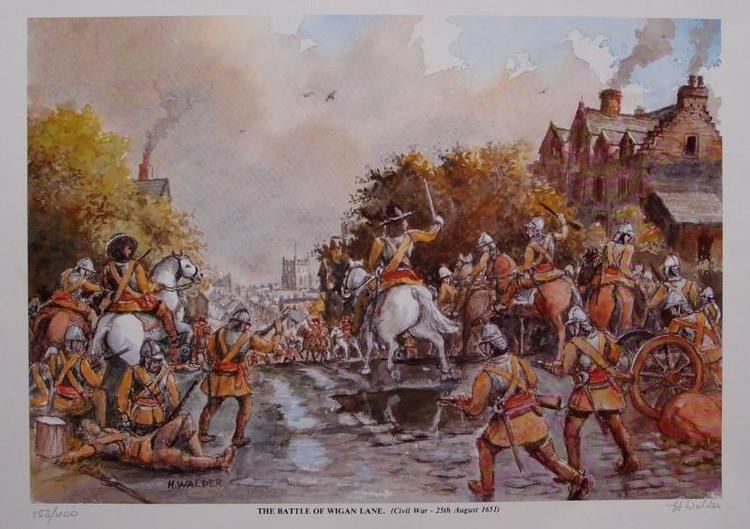
This culminated in a battle at Wigan which was disastrous for the Royalists – 60 Royalist leaders were killed or died of their wounds, and 400 men were captured – among them, Sir Timothy Featherstonhaugh. After trial by court-martial at Chester he was beheaded in that city on 22 October.
What remained of the Royalist forces joined the king at Worcester, but without large numbers of English Royalists to support him, his position was untenable and nine days later his predominantly Scottish army of about 15,000 men was decisively beaten at the Battle of Worcester by a Parliamentary army nearly twice the size under the command of Cromwell. Two of Sir Timothy’s sons were killed in the battle. This victory brought to an end the Third English Civil War and ushered in nine years of republican rule.
The family’s losses were enormous and in June 1661 two of Sir Timothy’s other sons, Philip and John, were obliged to petition for places as pages to the queen ‘to lessen the charges of their mother, who was brought very low by the late times’. The petition was granted. These appointments and the present of a portrait of Charles I are said to have been the only recompense the family received. In the chancel of Kirkoswald Church is a monument to the memory of Sir Timothy erected by his grandson Thomas.