

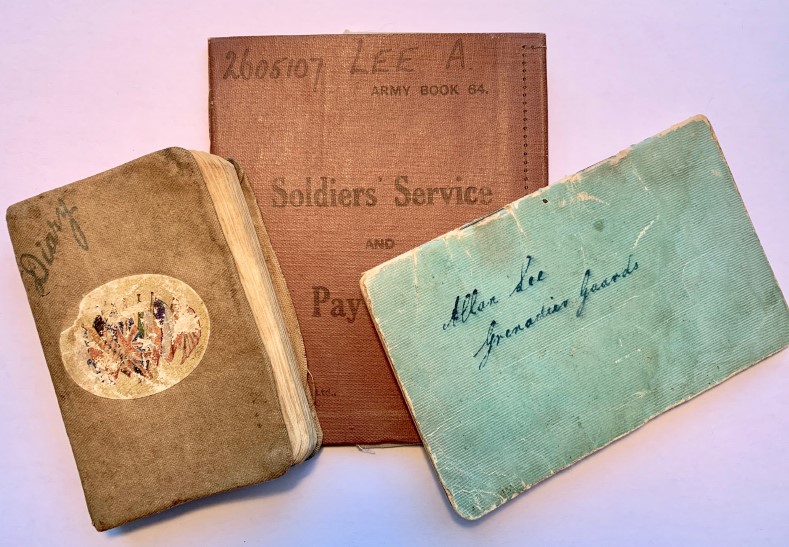
Grandfather Allan Lee
My cousin Adam has done a fantastic job transcribing and editing the wartime diaries of our grandfather, Allan
The two diaries kept by Allan during 1918 are the main source material. The diary covering the period January 1st 1918 to April 12th 1918 is one of the widely issued “The ‘Allies’ Diary for 1918”. The diary is small (95mm x 65mm) but there is a full page for each day. Allan used pencil or pen and he made an entry for each day until April 12th. The other diary is a simple blue notebook with lined pages. It is a record in pencil and ink of Allan’s experiences as a PoW and runs from April 13th to November 29th when he was discharged in Ripon.
Adam’s work and the diaries can be read in this PDF document:
Allan joined the army in Pontefract on 10th November 1914. He was sworn in and passed fit for service. Before that he had been a miner living and working in North Skelton, near Middlesbrough. North Skelton was the site of one of the deepest iron ore mines in the country and the work would have been very demanding physically and very dangerous.
Allan had joined one of the elite regiments of the British Army. The Grenadier Guards normally consisted of three service battalions but in 1914 the decision was made to raise a fourth service battalion. Allan was assigned to 1st Company 4th Battalion. Caterham was the main training barracks for all the Guards regiments and it is reasonable to assume that Alan was stationed there throughout his basic training.
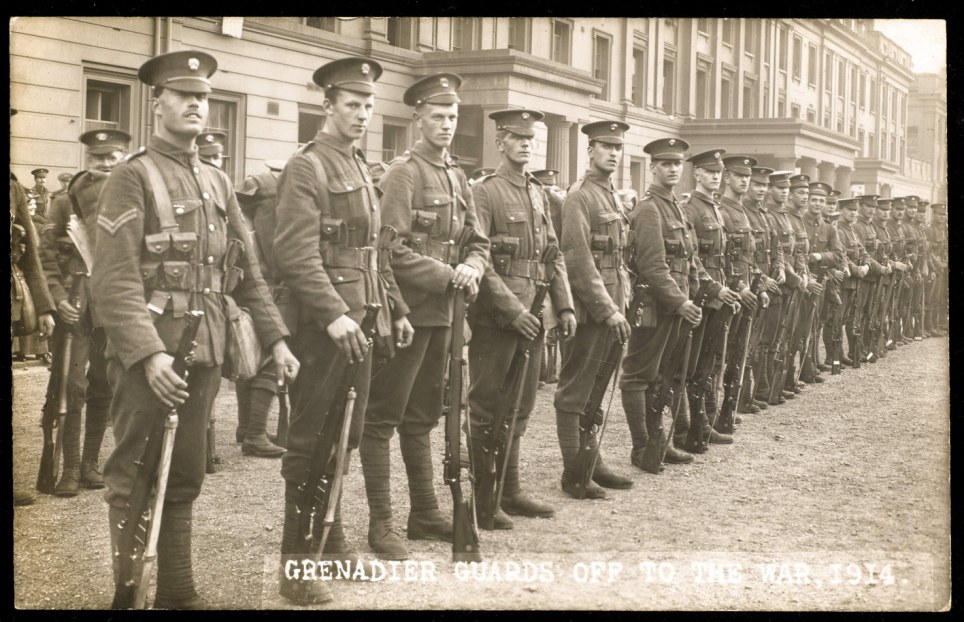
The regiment was involved in the war in France as part of the BEF (British Expeditionary Force) from August 1914 onwards but the 4th Battalion did not reach France until August 1915. The 4th Battalion’s first major engagement was the Battle of Loos (25th September to 8th October) in 1915. However Allan, according to his Military History sheet, did not leave for France until 5th October, and is therefore unlikely to have joined the Battalion before the end of the battle. This was fortunate. The Ponsonby history (Volume 1 pp.318-319) records that casualties (those gassed, killed or wounded) were very heavy. The non-officer ranks had a casualty rate of almost 40% (364 men) and the officers of over 50% (11 of 20 officers).
The next major battle for Allan and the 4th Battalion was the Somme (1st July to 18th November 1916). Allan was wounded at the assault on Les Boeufs on 25th September. He had a gunshot wound to his back, head and hand. Again the casualties were very high.
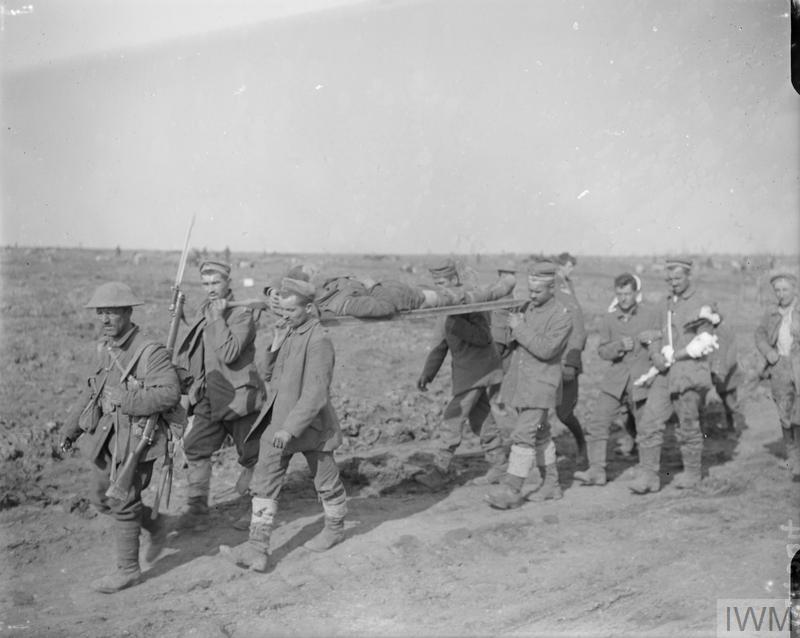
The Grenadier Guards were based at Penton Camp near Proven in Belgium for much of August 1917. The 4th Battalion was back to full strength with the return of wounded soldiers like Allan and the influx of new recruits. The battalion consisted of 32 officers and 882 men at this time. It saw further action in the Battle of Passchendale (31st July to 10th November) and in the Battle of Cambrai (20th November to 6th December).
By the time Allan began writing his diary, he was already a very experienced soldier who had fought in three of the major battles of the war. As a Lance Corporal he would have responsibility for privates in his section. He was 22 years old.