

8th Great-Grandfather
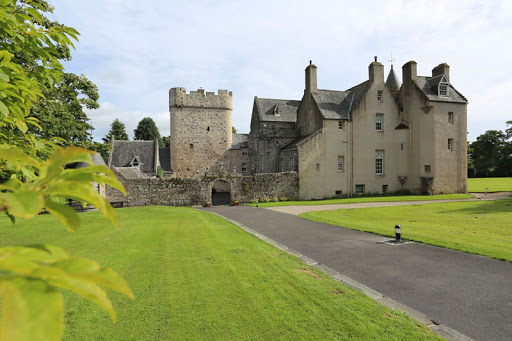
Matthew Irwin was born in 1678 – probably in Scotland – but moved to Co Antrim in Ireland soon after he married his wife Elizabeth in 1707. His family – which had been based at Drum Castle had always been Royalists, but in the 1600s, with the strength of the “Covenanters” and the weakness of the King and his few supporters, the Laird and his estate suffered badly. The Covenanters were members of a 17th-century Scottish religious and political movement, who supported a Presbyterian Church of Scotland, and the primacy of its leaders in religious affairs. The origins of the movement lay in disputes with James VI and his son Charles I over church structure and doctrine. By 1640, Scotland was controlled by tbe Covenanters.
Alexander, the 10th Laird and Matthew’s great-grandfather, was imprisoned and a decree was issued by the Covenanters to demolish the Tower and the Castle of Drum, though in fact that never seemed to have happened.
So it was probably no surprise that the family left for Ireland. Robert, Sir Alexander’s son, settled at Glencoe, near Larne, and married Elizabeth Wylie. But the family only stayed in Ireland through two generations, the third in a large part, heading for America.
Matthew, his wife and children left Ireland about 1740 and settled in Pennsylvania, probably Bucks County, where he was active in the mill business.
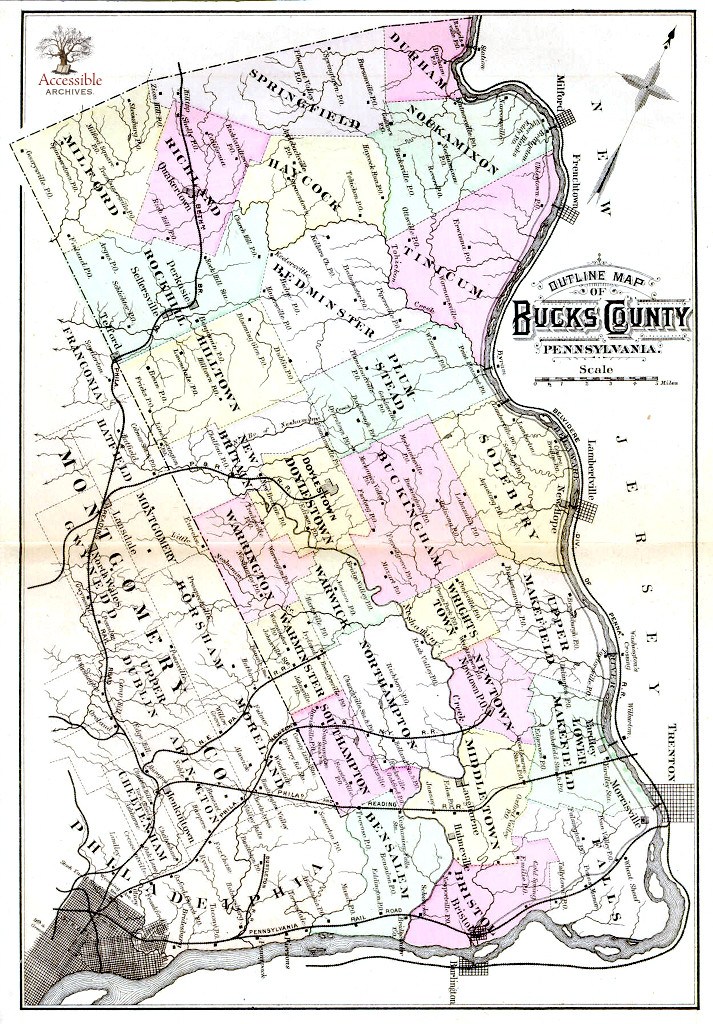
Bucks County is one of the three original counties created by colonial proprietor William Penn in 1682, naming it after Buckinghamshire, the county where he had lived in England.
After Matthew died, Nathaniel Irwin and his family may have been living in Mecklenburg County, North Carolina in 1767, or he may have gone there just to take care of the affairs of his late father. Letters of administration in the courthouse there show that on “21 Octr 1767” a letter of administration was granted to “Nathaniel Irwyn” on the estate of “Mathew Irwyn.”
Most accounts indicate that Nathaniel was a farmer in his early days in Pennsylvania, and a “plantation owner” later in the Carolinas, specifically mentioning a plantation known as “Cherry Fields” in the Iradell/Rowan County area. Cherry Fields could have even been in Burke County, close to son Arthur’s extensive holdings known as Belvedere. His son Alexander’s plantation, called Bellevue, was close by as well, and both were near Morganton in Burke County.
Nathaniel was also a Presbyterian minister. In McCall-Tidwell and Allied Families, a book written by Ettie Tidwell McCall, in 1931, the author wrote, “He was a Presbyterian preacher and a maker of spinning wheels.” It is probable that his service to the church was not a full time job, for in the early days the clergy often had to supplement the support offered by their congregation. The comment about spinning wheels is curious, and indicates that he may have had other talents and interests as well.
It is clearly recorded that Nathaniel’s son Alexander was a Revolutionary War Patriot, and remained in such spirit for the remainder of his life. However, it is also recorded that father Nathaniel played his part in the Revolution, and records do exist of the service of a ‘Nathaniel Irwin’.
In his twilight years Nathaniel, and wife Leah Julian Erwin, lived in York County, South Carolina, probably near the town of McConnells. It is generally believed that Nathaniel was one of the founders of the Bethesda Presbyterian Church there. It is also thought that he may have been the congregation’s first minister. The church, built of stone, is still active, and it is reported that one can still make out the slave sitting area in the back of the balcony. The large cemetery adjacent to the church contains a marker in memory of Nathaniel Irwin.